
Tuesday, 12 February 2008

SRI LANKA HOLIDAYS: ASOKAMALA OF LANKA


Tour the beautiful island of Sri Lanka with My Sri Lanka Holidays. Contact Riolta Lanka Holidays today. We reveal for you to revel: the right stuff
We reveal for you to revel: our island, our nation & our faith will prevail

Riolta Lanka Holidays (Pvt.) Ltd., Sri Lanka

Website: www.rioltalankaholidays.com OR www.mysrilankaholidays.com

www.my-srilankaholidays.com

www.my-srilanka.com
www.bunpeiris.com

SRI LANKA HOLIDAYS: ASOKAMALA OF LANKA

Isurumuniya Rock temple, Anuradhapura, Sri Lanka

In the loveliest part of old Anuradhapura, in a group of black granite boulders, there nestles the Isurumuniya Rock temple. The temple built in the 3rd century B.C., was the first repository of the Sacred Tooth Relic of the Buddha. The present repository of the Sacred Tooth relic is Holy Temple of the Tooth at Kandy, Sri Lanka. In the ancient times the Isurumuniya Rock Temple was known as Meghagiri Vihara or the Shrine of the Clouded Mountain. 

The Lovers
Some of the finest sculptures in Aanuradhapura are found at Isurumuniya Rock Temple. The most famous of all is “The Lovers” which represents King Dutugamunu’s son Prince Saliya & his heartthrob Asokamala. “The Lovers” carved in the fifth century is of the artistic tradition of Gupta Art of India.
Asokamala
Discovered adorned with Asoka flowers, plucking Asoka flowers in Asoka gardens , the lissome gypsy damsel of incomparable beauty & matchless grace was named Asokamala by her royal discoverer, Crown Prince Saliya. Such was the divine beauty of the damsel, it is said, she was the one, whom you would have tonight, even at the price of falling into the netherworld in the following night.
“If she wasn’t the light of your life & lust of your loins, I would have made her mine” King Dutugamunu,(161-137 BC) of Lanka , the hero of the nation declaring upon being mesmerized by the beauty of Asokamala, the heartthrob of his son.

Historical romance of enamored Prince Saliya, who forsook his right to crown for Asokamala, has been narrated many a times for a couple of millenniums. Following extract is by courtesy of Sri Lankan writer Lankaputhra illustrious R. L. Brohier, O. B. E., Hon. D. Litt. (Ceylon)

Discovering Ceylon by R. L. Brohier ISBN 955-8425-54-0
It was translated for me many years ago by a pundit. No words in English can adequately convey the terms of simplicity & tenderness, or the feminine charms & graces alluded to in the Sinhalese version of the story.

King Dutugamunu had one some named Sali. Not content to bestow on him the ordinary endowments of a prince, the historiographers have not hesitated to ascribe to him a combination of every manly virtue. Delighted with his accomplishments, his father raised him to the dignity of viceroy, & built him a stately palace at the south-end of Anuradhapura.

On a certain day, Sali together with a number of young chieftains went sporting in the ‘Mahamega’ of pleasure gardens of the city. Attracted by an Asoka tree which was spangled by bunches of beautiful blossoms he walked up to it. Looking up when he got nearer, he spied among the leafy branches a young women who had climbed the tree to pluck some flowers. She was naked from the waist up, but for scanty scarf hanging from her neck which afforded a semblance of propriety, but had got displaced in her efforts to reach out for the flowers.
The beauty of her form in the shade of deep foliage, & her panchakalyana or five feminine graces held Sali enraptured.

Passion was asleep for the while, but his eyes brimming with a sudden devotion reflected a surpassing tenderness & exquisite bliss, she seemed to him as it were, to be an embodiment of lightening, or like a full moon in a dark cloud.
The prince’s retinue & the other courtiers, who were attracted by Prince Sali’s distraction gathered around him. Entranced by what they saw, & seized with desire, they began severally to accost the girl in ribald jests: ‘Golden one, who & whence art thou? ‘Art thou a daughter of a man or goddess-for never in this world was beauty seen like thine?’ ‘Tell us who are thy parents, & whether thou art married or unmarried?”
‘Lords,” replied the maiden, “I am of the low-born of this earth, forbidden to even cover my breasts, the daughter of the chief of Chandalas, a despised & scorned caste. I prey thee, noble lords, let me be gone to my people.”
Sali whose heart was wrung on hearing her sad appeal, beckoned to the girl to alight from the tree. Turning to the company gathered around him he remarked in an undertone: “Precious stones & pearls are not rejected by man even though they may be found in dung–heap. Why then should damsel-who no woman in Lanka equals in beauty, be despised because she was born of the Chandalas?”
Turning to the girl, he said, ‘Fair one! Don’t think of these odd things. Only remember that I am here beside you….” Taking her by the hand he conducted her to a closed palanquin, & escorted her to his palace. “You will in future be named: Asoka mala,’ he said when he received her at the entrance to his palace...”the fragrant flower I picked from the Asoka-tee”
A thousand tongues which had sung Prince Sali’s fame carried the news of his sensational amour with the Chandala women, to every corner of the city of Anuradhapura. It eventfully reached the ears of the King Dutthagamini, displeased & considerably ruffled but outwardly displaying dignified calm, summoned the favourite lady of his court, & said to her: go to my son, & tell him…Lord, thy father will get thee a princess of the royal, or of the Brahmin caste, for wife…& thy royal father will stand down & proclaim thee King…if thou wilt forsake this daughter of chandala, & stain not the royal caste.’
All the forces of nature & emotion seemed to be behind the answer Sali sent his father, declaring his unalterable attachment to the damsel of his choice. Howbeit, the king, on learning of his son’s resolution, thought of another approach. Sending for his Brahmin astrologers, & others skilled in soothsaying, he bade them go to his son’s palace to see Asoka-mala, & to report on the tokens of fortunes she possessed.
As they were bidden, these wise men presented themselves at Sali’s palace. When they saw Asoka-mala, they were so intoxicated by her charms that they tarried no more than a short while; getting back, they presented themselves before the king, exclaiming; “Your Majesty… Asoka-mala is blest with a body the colour of gold, her large eyes resemble the petals of the blue mahanil (4), and the soft soles of her feet the petal of the red tank flowers. Endowed thus she is certainly propitious, & is for to be the chief consort of Sakreya.’
On being told by his astrologers & soothsayers that Asokamala was fit to be the consort of Sakreya, or Indra-the reagent of the gods, & on hearing her beauty described in such immoderate terms, King Dutthagamini was filled with desire to see her himself. He sent world of his intentions to his son.
Sali, glad beyond measure of the opportunity to confront his father with the, Chandala damsel he had made up his mind to wed, sought Asoka-mala, & said: “Beloved one, my father...the king, is this day coming to the palace for the purpose of seeing theee; delay not therefore in due preparation.” Hastening to do the prince’s bidding she set about preparing the most delectable viands, & arrayed herself in the choices of apparel which had been provided for her earlier on the orders of he prince...
Deporting themselves in humble posture Sali & Asoka-mala stood together with great respect & obeisance at the entrance of the place to receive the king & his ministers. The king overwhelmed by the contagion of her beauty, addressed her: “Art thou then that happy maiden my son has named Asoka-mala” In a voice full of rhythmical cadence she replied”’ I am... my lord.”
Dutthagamini, confounded by delight, took his seat, & was served by her in person. Repenting of his intention to deprive his son of this excellent maiden, the king was filled with a wild exaltation to prove his favour. He accordingly lavished upon his son & would-be daughter, every outward expression of his paternal goodwill. Giving both of them advice for the future, he placed them upon a heap of gold, & performed the marriage ceremony. Under the open windows in the courtyard, the musicians continued to play & sing in an air which was full of love & dreams, & in a scene lit by a brilliant moon, the king left the happy pair to return to his palace.
Prince Sali, far from becoming palled with the charms of his wife, continued to enjoy the most perfect happiness; while Asokamala, spending her time in acts of charity, balanced the sufferings of the less fortunate from the super-abundance of her own good fortune. Thus, in an atmosphere of passion & goods deeds, the pair blended life with intoxicating happiness.
The legend is probably the most authentic in Sinhalese tradition since it crystallizes into coherent thought the portrayal of a period-piece passed down by ancestators to posterity on a theme which animates all living souls down the ages, & is current to this day. It has even found a counterpart in monument.
Before his death, Dutthagamini sent for his dashing, romantic son, & is understood to have said to him” Thou may’st succeed to the throne, & reign protecting the world, & our religion.” Sali was well aware of the condition on which he ‘may’st’ do so. In its small scape, every line of the tradition carries a moral. In, his choice between the throne, & Chandala women, Sali opens the windows of his soul that saw the finest in everything...he refused the throne. (5)
End.
Footnotes in italics are mine. bunpeiris

Ancient Sinhalese have defined the ultimate graces of beautiful women -bright red (tone of the tender NA leaf) (1) lips, long blue-black hair (2), doe-eyes (3), swans-like breast , light brown clear complexion, narrow waist & broad hips.

(1) Among the remarkable features of NA is beautiful bright Red Leaves that finally matured in to a deep green. The “Na Tree” (Iron wood), botanically called “Mesua Nagassarium” grows to about 30 m high and indigenous to the lower wet Zone of Sri Lanka. In early times the NA timber was used to make bridges owing to its hardness & durability. Today it is a protected tree. It's believed that the first visit of Buddha was to grove of a NA Tree at Mahiyangana. It is also said the next Buddha Maitreya (Natha) will attain enlightenment under a NA tree. The flower of NA is also used in herbal medicine and preparation of perfumes, cosmetics and soaps. Na tree is named the National Tree of Sri Lanka in 1986.

(2) Ancient & medieval Sinhalese poetry praising the beauty of perfect women emphasize the color of hair as bluish black. Muthiyanga stupa of Sri Lanka enshrines Sacred Kesha Datu, a lock of pure & blue-black hair of Gauthama Buddha. Perhaps such could be the color of the hair of an Asian man of perfect of health & purest of thought.

(3) In ancient Sinhalese poetry long serene eyes of beautiful women are likened to those of a doe.

(4) The Nil Mahanel (Nympheae Stellata) plant which grows in shallow waters is found in all over the island of Sri Lanka. The beautiful purplish flower with a heavy concentration of petals in the centre is also considered a symbol of truth, purity and discipline. This flower also referred to as "Kuvalaya", "Indhewara", "Niluppala", "Nilothpala' and "Nilupul" is narrated in many Sinhala, Pali and Sanskrit Literary works. The flower which occupies a pre-eminent position in Buddhist literature is among the 108 symbols of virtue found in the footprint of Gautama Buddha. The Sigiri Apsaras at Sigiriya Lion Rock Citadel are depicted plucking Nil Mahanel. Traditional Sinhalese poetry of Sri Lanka known as "Sandesa Kavya" likens women's eyes to Nil Mahanel flowers. It was declared the National Flower of Sri Lanka in 1986.

(5) On the death of King Duuthagamini, his brother Saddatissa, Tissa the Pious, was consecrated. He reigned for 18 years during 137-119 BC.


Friday, 1 February 2008

SRI LANKA HOLIDAYS: CEYLON CINNAMON


SRI LANKA HOLIDAYS: CEYLON CINNAMON bunpeiris

Tour the beautiful island of Sri Lanka with My Sri Lanka Holidays.

Are you sure what you have in your hand is Ceylon Cinnamon from Sri Lanka? The botanical name Cinnamomum zeylanicum is derived from Sri Lanka’s name during 1815-1972, Ceylon.

The finest cinnamon is Ceylon cinnamon from Sri Lanka. Indonesian cinnamon too of similar taste yet with inferior quality & in larger quills. Much of what is sold as cinnamon is not really true Sri Lankan or southern Indian cinnamon, but rather Chinese cassia cinnamon, which is native to that country. That’s not the Right Stuff. In Sri Lanka we reveal the Right Stuff for you to revel.

Cinnamon Rice Pudding by GIGI, Pasadena, California, United States

“Its cinnamon is the best in the world”

Captain Joao Ribeiro in his book on Sri Lanka titled
“The Historic Tragedy of the island of Ceilao”

Lisbon, 8th January 1685 dedicated to His Most Serene Majesty Dom Pedro The Second

  • 1 heaping cup of arborio rice.
  • Cinnamon stick
  • 1 vanilla bean, split and scraped
  • 32 ounces of skim milk (yes, skim)
  • 1 cup of heavy cream
  • ½ cup of sugar
  • 1 teaspoon of cinnamon

Sri Lanka’s recorded unbroken civilization runs back to 543 BC. Tthougout the period of 16th-18th centuries, cinnamon was the Holy Grail of Portuguese, & Dutch invaders. Such was the value of Ceylon cinnamon, it became the main article of trade for Dutch East India Company whose main seaports were Colombo & Galle. VOC Galle Dutch Fort of Sri Lanka is the best preserved colonial sea fortress in the whole of Asia.

“The Helen or the Bride in Conteft of this isle is the fineset & purest Cinnamon, which growing only in this island”
Philip Baldaeu: A Description of the Great & Most Famous isle of Ceylon 1671, Amsterdam

Place the rice, cinnamon stick, vanilla seeds, vanilla bean, skim milk, heavy cream, and sugar in a 2-quart saucepan. Bring to a boil over medium-low heat, stirring often. Next, reduce the heat to low and simmer for 25-30 minutes. Discard the vanilla bean and cinnamon stick. Stir in the 1 teaspoon of cinnamon. Divide the pudding into (4-6) ramekins. You can serve it warm if you’re like me or wrap them up tightly and enjoy when cooled.

Well, that’s how rice pudding is cooked in America. In Sri Lanka, you can even steam cook rice pudding on a cone-cupped leaf of a plant called ‘Kanda” by means of a dressed up bamboo steamer set on a clay pot. Moreover, “Pudding spice" which is a compound of nutmeg, clove, cardamom, mace and all spice would serve the purpose much better.

All this stuff are well produced & marketed in Colombo, Sri Lanka. You can buy all these spices in Spice Gardens in the Royal city of Kandy, the gateway to Central Highlands of Sri Lanka

Cinnamon quills
Cinnamon quills are inner bark of a tropical evergreen tree, harvested during the rainy season when pliable and then dried into curls sold as sticks or ground into a powder. With its warm, sweet flavor, cinnamon is a vital ingredient in flavoring baked goods, in cooking stews and & making sauces

Cinnamon Jungles
Captain Joao Ribeiro in his book on Sri Lanka titled
“The Historic Tragedy of the island of Ceilao” narrates of Cinnamon jungles of Ceylon (Sri Lanka)

…these are so dense that a man cannot walk through them a stone’s throw. In shape the leaves of the cinnamon resemble those of the plantane in that they have three ribs, & in texture the laurel; when crushed between the fingers their smell is as of the best cloves of Rochella. The trees are not very tall, for they do not exceed two bracas at the most;& as there is rain here daily they do not shed their leaves,& most of them bear two crops of fruit, which is similar to the laural berry, in the year. When this falls on the ground, it immediately starts growing in consequence of the heat & moisture; & it is for this reason that the inhabitants have a law that they should clear their roads frequently; unless they do so, they would be all thick forest in one year

First cultivation of cinnamon
In the year 1770, Dutch East India Company continued to overhaul the methods of harvesting in the wild, and eventually began to cultivate its own trees.

Cinnamon Today
Today Sri Lanka is a major exporter of cinnamon. According to the United Nations Food and Agriculture Organization, Sri Lanka exported 11,068 metric tons of cinnamon in 2003, comprising most of the world production of true cinnamon.

In Westen & Southwestern coast belt –finest beaches of the world
Sri Lanka's cinnamon groves lie exclusively in its western and southwestern regions, north and south of the country's commercial capital, Colombo. The tropical sunshine and abundant rain of these areas provide an ideal habitat, but even here the quality of the spice varies with soil conditions.

The best of the best Ceylon cinnamon today
The sweetest, most prized variety grows in the "silver sand" coastal belt of the Negombo, close to the one & only International airport (CMB) of the Island. The immediate environs of Colombo itself once comprised large spice plantations - even today its prime residential quarter is known as Cinnamon Gardens.

Government support now
Well-tended trees free of diseases such as leaf blight and white root yield about 100 kilograms of cured bark per acre. Cinnamon trees have a productive life span of about 40-50 years after which they have to be replanted, for which cinnamon growers receive generous subsidies from Department of Minor Export Crops, Matale, Sri Lanka. Matale is located close to cultural heartland of the island, Kandy.

Thursday, 31 January 2008

Sri Lanka Holidays: Masters versus Commanders.


Sri Lanka Holidays: Masters versus Commanders. bunpeiris

Tour the beautiful island of Sri Lanka, The Land of Delights with Riolta Sri Lanka Holidays. Total Holiday Experience awaits with you in The Land of Delights.

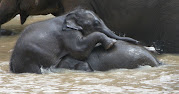
British Colonial Masters Versus Commanders of the herds of Ceylonese Elephants

Following text is extracted from THE BOOK “The Wild Elephant & The Method of Capturing & Taming It In Ceylon by SIR J. EMERSON TENNENT First published in the yea 1867, London, Great Britain.
AES Reprint ISBN 81-206-1666-9
Subtitles in bold letters & foot note in italics are mine, for your entertainment. bunpeiris

Submission to the Commander
Those who have lived much in the jungle in Ceylon, & had constant opportunities of watching the habits of wild elephants, have witnessed instances of the submission of herd to their leaders, that suggests an inquiry of singular interest as to the means adopted by the latter to communicate with distinctness, orders which are observed with the most implicit obedience by their followers.
The following narrative of an adventure in the great central forest toward the north of the island, communicated to me by Major Skinner, who was engaged for some time in surveying & opening roads through the thickly-wooded districts there, will serve better than any abstract description to convey an idea of the conduct of a herd on such occasion:-

Major Skinner, the builder of Colombo – Kandy Road narrates
“The case you refer to struck me as exhibiting something more than ordinary brute instinct, & approached nearer to reasoning powers than any other instances I can now remember. I cannot do justice to the scene, although it appeared to me at the time to be so remarkable that it left a deep impression in my mind.

Dry season
“In the height of the dry season in Neuera-Kalawa, you know the streams are all dried up, & the tanks nearly so. All animals are then sorely pressed for water, & they congregate in the vicinity of those tanks in which there may remain ever so little of the precious element.

“During one of those seasons I was encamped on the bund or embankment of a very small tank, the water in which was so dried that it surface could not have exceeded an area of 500 square yards. It was only pond within many miles, & I knew that of necessity a very large herd of elephants, which had been in the neighbourhood all day, must resort to it at night.

Uneasiness in the jungle at the Presence of the Colonial Master
“On the lower side of the tank, in a line with the embankment, was a thick forest, in which the elephants sheltered themselves during the day. On the upper side & all around the tank there was a considerable margin of open ground. It was one of those beautiful bright, clear, moonlight nights, when objects could be seen almost as distinctly as by day, & I determined to avail myself of the opportunity to observe the movement of the herd, which had already manifested some uneasiness at our presence

Oh! Charlieeee!!! The master is up on an enormous tree over the tank

The locality was very favorable for my purpose, & an enormous tree projecting over the tank afforded me a secure lodgment in its branches. Having ordered the fires of my camp to be extinguished at an early hour, & all my followers to retire to rest, I took up my post of observation on the overhanging bough; but I had to remain for upwards of two hours before anything was to be seen or heard of the elephants, although I knew they were within 500 yards of me.

Discretion is the better part of valor, even if you an elephant
At length, about the distance of 300 yards from water, an unusually large elephant issued from the dense cover, & advanced cautiously across the open ground to within 100 yards from the tank, where he stood perfectly motionless. So quiet had the elephants become (although they had been roaring & breaking the jungle throughout the day & evening), that not a movement was now to be heard. The huge vidette remained in his position, still as a rock, for a few minutes, & then made three successive stealthy advances of several yards (halting for some minutes between each, with ears bent forward to catch the slightest sound), & in this way he moved slowly up to the water’s edge.

Discipline over the compulsion
Still he did not venture to quench his thirst, for though his fore feet were partially in the tank & his vast body was reflected clear in the water, he remained for some minutes listening in perfect stillness. Not a motion could be perceived in himself or his shadow. He returned cautiously & slowly to the position he had at first taken up emerging from the forest. Here in a little while he was joined by five others, with which he again proceeded as cautiously, but less slowly than before, to within a few yards of the tank, & then posted his patrols.

Lead your guys from the front
He then re-entered the forest & collected around him the whole herd, which must have amounted to between 80 to 100 individuals,-led them across the open ground with the most extraordinary composure & quietness, till he joined the advanced guard, when he left them for a moment & repeated his former reconnaissance at the edge of the tank.

Green Light following order & discipline
After which, having apparently satisfied himself that all was safe, he returned & obviously gave the order to advance, for in a moment the whole herd rushed into the water with a degree of unreserved confidence, so opposite to the caution & timidity which had marked their previous movements, that nothing will ever persuade me that there was not rational & preconcerted co-operation throughout the whole party, & a degree of responsible authority exercised by the patriarch leader.

Drink your fill to the content of your heart
When the poor animals (1) had gained possession of the tank (the leader being the last to enter), they seemed to abandon themselves to enjoyment without restraint or apprehension of danger. Such a mass of animal life I had never seen huddled together in so narrow a space. It seemed to me as though they would have nearly drunk the tank dry.

Taking to flight like a herd of frightened deer
I watched then with great interest until they had satisfied themselves as well in bathing as in drinking, when I tried ho small a noise would apprise them of the proximity of unwelcome neighbours. I had but to break a little twig, 7 the solid mass instantly took to flight like a herd of frightened deer, each of the smaller calves being apparently shouldered & carried along between two of the other ones.

The reason for the deep apprehension & extreme caution of the herd of elephant narrated above could be attributed to the continuous savage slaughter of them by the British colonialist during 1815-1948. Elephant, the bulldozer & bulldog of ancient Lanka has been a protected species since the beginning of Aryan Sinhalese civilization in 543 BC to the capitulation of the island to British in the year 1815. Since independence in 1948, Elephant has once again become a protected beast of the island. The last Kraal was held in 1952. Today we have sanctuaries. Please click & read

Uda Walawe National Park, Sri Lanka

Minneriya National Park, Sri Lanka

Kaudulla National Park, Sri Lanka

Ruhuna Yala National Park, Sri Lanka

Wasgomuwa National Park, Sri Lanka

Pinnawela Elephant Orphange

1. Poor animals were killed like flies Quote J. Emerson Tennent once again
Chapter 111 ELEPHANT SHOOTING
As the shooting of an elephant, whatever endurance & adroitness the sport may display in other respects, requires the smallest possible skill as a marksman, the numbers which are annually slain in this way may be regarded less as a test of the expertness of the sportsman, than as evidence of the multitudes of elephants abounding in those parts of Ceylon to which they resort. One officer, Major
ROGERS, killed upwards of 1400; another, Captain GALLWEY, has the credit of slaying more than half that number; Major SKINNER, the Commissioner of Roads, almost as many;& less preserving aspirants follow at humbler distances.

Wednesday, 30 January 2008

SRI LANKA HOLIDAYS CHRYSOBERYL CAT’S EYE


CHRYSOBERYL CAT’S EYE FROM SRI LANKA bunpeiris

Ratnapura, Sri Lanka
The name chrysoberyl is from the Greek Chrysos , meaning golden, and beryllos, which refers to beryllium content. Chrysoberyl Cat's eys is found in the company of sapphires in the gem gravels of Ratnapura (City of Gems) of Sri Lanka.

The record for the size
The cat's-eye record for size was long held by Sri Lankan (Ceylonese) specimen. Until the year 1815, the year of capitulation to the British in Kandy, Chrysoberyl was a Jewel in the Crown of the King of Sri Lanka. The weight of the Sri Lanka’s stones ranges from one to one hundred carats

Legendary qualities
Since ancient times, chrysoberyl has been regarded as a gemstone which protects its wearer and keeps disaster at bay. The cat's eye most of all is seen as a particularly effective protective stone and talisman. On account of its golden tones, chrysoberyl is often also associated with wealth. In modern gem therapy, discipline and self-control are the qualities mainly associated with chrysoberyl. Chrysoberyls are also said to promote concentration, far sighted thinking & and the ability to learn.

Chatoyancy.
Chrysoberyl cat’s eye perfectly mimics the ghostly appearance of the eye of a cat caught in a pair of headlights of a car at night. This eerie yet scintillating effect is caused by tiny, hair-like inclusions reflecting in the light. It is called chatoyancy in Gemology. While this characteristic appears in other gems, none has the clarity & beauty of Chrysoberyl cat’s eye.

Two most popular colours
The stone comes in two colors; translucent honey brown or apple green, & is cut into high-domed cabochons. A slit of silken-sheen of silvery white glide across the face of the dome whenever the gem is tilted slightly, widening & narrowing like the iris of a cat’s eye: the gem winks all the time.

Milk & Honey Effect
Chrysoberyl cat’s eye exhibit a quality called Milk & Honey Effect. When a pen light is aimed at the side of the stone, one half will appear milky white, while the other half remains gold.

Following is a description of a rare specimen of exceedingly high quality, large, uncut yet polished Chrisoberyl Cat’s eye in Sri Lanka by Captain Joao Ribeiro (Portuguese) in the year 1685

The stone which is most sought after in Ceilo (1)& held in the highest esteem for its great value is the catseye;most people do not know of this stone nor have they seen it, for it is not used among us, but the Moors & Gentiles (2) value it above all others. I have seen one of the size of a pigeon’s egg & bored through, which the Prince of Uva (3) wore on his arm when he fled to us.
In shape they are spherical like musket balls some large & some small, & in weight they exceed every kind of precious stone. They are not cut but polished; & they show a colour composed of every colour which God has crated. No one colour is seen separated by itself, but they all make a wonderful mixture & appear to be struggling in their anxiety to get first in the race. At a distance the entire stone seems cut across by a straight line such as cat shows in the middle of its eye at a certain hour of the day. This is styled the beta (4) & from its appearance they name the stone the cat’s eye.
When the stone is moved one beta disappears & another & another takes it space & others still follow, so that the sight is doubtful as to which it saw first; for by this movement in the midst of its glitter one line appears & the others disappear. The stones of the greatest value & most prized are these which have most lines; they are found with three, five, sometimes never with an even number.

Above text in italics is extracted from

Chapter XXI : The great abundance of precious stones & other commodities found in the island of the book "The Historic Tragedy of the Island of Ceilao"
Dedicated to His Most Serene Majesty Dom Pedro The Second
Written by Captain Joao Ribeiro
Dedication on 8th January 1685 at Lisbon, Portugal by Captain Joao Ribeiro
Translated by P. E. Pieres in the year 1909 at Colombo, Sri Lanka
AES Reprint ISBN:81-206-1334-1

1. Ceilo ( Portuguese) , Zeilan (Dutch), Ceylon (British) Sri Lanka (since 1972)
2. Natives of the Island, i.e. Sinhalese
3. Prince Vijayapala, the Prince of Matale, Sri Lanka, brother of King Rajasinha
4. A vein of gold in rock


Tuesday, 22 January 2008

Sri Lanka Holidays Ruwanweli dagoba


Ruwanweli dagoba (Mahathupa) (Great Thupa), Anuradhapura, Sri Lanka
(Part 1)
Compilation by bunpeiris

Stupa (a Sanskrit word) has its own country names: Chorten (the basis of offering) in Tibet and Bhutan; Chaitya in Nepal; Candi in Indonesia; Chedi (a Pali synonym) in Thailand; Chedey in Cambodia; Tap in Korea; That in Laos; Ta (meanining tower) in China; Pagoda in Japan.

1 Concept of Stupa (Dagoba): symbol of Enlightened mind

“It is through the language of archetypal symbols that we reconnect ourselves with the primordial ground from which all human culture has sprung... Among the oldest of architectural forms, the Stupa is a universal symbol of enlightened mind, a familiar sight in all countries where Buddhism has flourished. In the Stupa we find the ancient reliquary monuments once built for kings and heroes transformed into profound expressions of knowledge. Rightly interpreted and understood by both reason and intuition, it mirrors the harmony and perfection of universal principles and invites the human mind to awaken its full capabilities...” Lama Angarika Govinda (1898- 1985) (a)

2 The monumental size of the dagoba

“….two largest dagobas at Anuradhapura surpass in content, & three dagobas exceeded in height, all but the two enormous pyramids of Khufu & Khafra at Gizeh”
Ancient Ceylon: H. Parker (Colonial British civil servant in Ceylon attached to Irrigation Dept of Ceylon during 1873-1904)
First published in 1909 Reprint ISBN 81-206-0208-0

3 The largest stupas in Sri Lanka
In size a monumental 338 feet high, the Mahathupa covers over an acre & half with a diameter of the circle at the base being 294 feet. It is said that the great stupa at Sanchi, in India, will be dwarfed by the side of the Mahathupa. It was not however, the tallest in Anuradhapura for very long, having this position for 250 years or so. The stupa of the Abhaygirii monastery was built during the reign of King Gajabahu (114-136AD) & towers at 370 feet. The Abhayagiri monastery was founded by King Vattagamini in 88 BC. The Abyagiri stupa too,was overtaken later during King Mahasen stupa which was originally built to 400ft height & at the time surpassed only by two of the larger pyramids of Egypt, making it the 3rd largest building in the world at the time. The Jetawana stupa now takes credit for being the largest of the stupas lies to the East of the Ruwan weli seya. Archt. Shereen Amendra: Beyoond the Seeing Eye; The Mahathupa of Lanka ISBN 978-955-50098-0-5 (b)

4 The Bulldozer & Bulldog of Lanka, the Elephant leads
With the materials thus obtained, the king (A) commenced the work on the Great Thupa as the Vaiskha constellation (B) appeared on the full-moon day of the month of May. Moving Devanampiatissa’s pillar to the sidelines of the site, the Ruler of the Earth used the former position as the center point of the radius of the majestic new thupa
Mahawmsa, the great chronicle of Sri Lanka - Modern text by Douglas Bullis ISBN 955- 1266-09-9

The lord of the land had the place for the thupa dug out to a depth of even cubits to make it firm in every way. Round stones (C) that he commanded his soldiers to bring hither did he cause to be broken with hammers, & then did he, having knowledge of the right & wrong ways, command that the crushed stone, to make the ground firmer, be stamped down by great elephants whose feet were bound with leather
Mahawamsa, the Great Chronicle of Sri Lanka 1912 translation by Dr. Wilhelm Geiger

5 That’s a hyper reinforced-concrete foundation in 161-137 BC
The clay at the place where the celestial river descends from its source in the heavens, through the air, across the earth into the underworld, being forever washed is exceedingly fine for thirty yojanas all around. On account of its fineness, it is called “butter clay”. Arahant samaneras (D) brought the clay from there. The workers spread the clay over the layers of stone. The king ordered bricks then laid over the clay, rough plaster over the bricks, quartz over the plaster, a network of iron over the clay, & above that, fragrant marimba brought by samaneras from Himalayas
Mahaawmsa , the great chronicle of Sri Lanka - Modern text by Douglas Bullis ISBN 955- 1266-09-9

The lord of the earth had crystal spread over that and, over the crystal, stones. Everywhere in work was the clay called “butter-clay’. With the resin of the wood-apple, mixed in mercury, a bronze plate, eight finger-breadths, was laid over the stones. The lord of the chariots had a silver plate, seven finger-breadths thick, laid over it with arsenic mixed in oil of sesamum
Mahawamsa, The great Chronicle of Sri Lanka New Translation (1989) Revision (2005) by Dr. Ananda W. P.Guruge ISBN 955-20-8963-8

6. Making of the relic-chamber
Thereupon commanding that the drums be beaten he called the master-builders together with all speed; in number they were five hundred. And one of them answered the king, on his asking; “How wilt thou make (the thupa)?” “Taking a hundred workmen I will use one wagon-load of sand in one-day.”

The king rejected him. Thereon they offered (to work with) one half less & yet one half less again (at last with) two ammanas of sand. These four master-builders also did the king reject. Then an experienced & shrewd master-builders said to the king:I shall pound (the sand) in a mortar, & then, when it is shifted, have it crushed in the mill (thus will use) one ammanna (E) (only) of sand. And on these words the lord of the land, whose courage was like to Indra’s consented, with the thought; ’There will be no grass nor any such thing on our cetiya. (F)
Mahawamsa, the Great Chronicle of Sri Lanka 1912 translation by Dr. Wilhelm Geiger

7. The aesthetic design
And he questioned him saying:’ “in what form wilt thou make the cetiya?” At that moment Vissakamma entered into (& possessed) him. When the master-builder had had a golden bowl filled with water, he took water in his hand & let it fall on the surface of the wateer. A great bubble had had a golden bowl filled with water, he took water in his hand & let it fall unto a half-globe of crystal. He said: ‘Thus will I make it.’ And well-pleased the king bestowed on him a pair of garments worth a thousand pieces of money) & ornamented shoes & twelve thousands kahapanas. (G)

Mahawamsa, the Great Chronicle of Sri Lanka 1912 translation by Dr. Wilhelm Geiger

8. Determination of the circumference
Uplifted by the power of pure happiness, the king, intent on the welfare of beings &, determined to trace a great circle for the cetiya, had a minister of noble birth-well attired in ceremonial dress-to hold the pure silver tracing stick fixed to a post of gold & began to trace a circle on the prepared site. A great thera of immense miraculous power, by the name of Siddhantha, being far-sighted, prevented the king from doing it. Seeing to the future &, thinking, ‘If the king were to start a thupa of this size, his death will come even while the thupa is not finished & a gigantic thupa will be difficult to repair,” he restricted the magnitude.

In agreement with the Sangha & from reverence to the thera’s statement & with his advice, had a medium-sized circle drawn for the cetiya so as to lay the bricks.

With unfailing energy, he had eight vases of gold & silver in the center &, around them, a thousand & eight vases & lots of one hundred & eight garments. He also had eight excellent brick placed separately. (H)
Mahawamsa, The great Chronicle of Sri Lanka New Translation (1989) Revision (2005) by Dr. Ananda W. P.Guruge ISBN 955-20-8963-8

Footnotes

(A) Hero of the nation, King Dutugamunu 161-137 BC, Sri Lanka

(B) Taurus

(C) Stones from creeks & rivers. Such stones have no more hidden fissures that will later break under natural pressure. When struck with hammers they shatter instead of cleave.

Foot note from Douglas Bullis

(D)The combination of “Arahant’ with ‘samanera” is not the contradiction in terms it appears to be. A samanera is simply one who has not taken upsampada or higher ordination. An Arhant is one who has eliminated ignorance of the Dhamma & the defilements of the mind, & by the assiduous practice of meditation & wisdom achieves enlightenment & purity of mind under the tutelage of instructors. One need not take higher orders to do this.
Foot note from Douglas Bullis’s modern text of Mahawamsa

(E) Ammanna is a measure of capacity equivalent to 11x 64 handfuls

(F)The use of too much sand would tell against the durability of the thupa. Therefore the Tika makes the king say to the mastebuilder:’Shouldst thou do so the cetiya would be like a heap of pure sand would be covered with grass & bushes.’ Geiger

Tika is the book of commentaries on the great Chronicle of Sri Lanka

On a visit to Mulgirigala in 1826, colonial civil servant George Turnour found in this library Sri Lanka's Rosetta stone, ola leaf (palm leaf manuscripts) containing the key to translate the Mahawamsa (the Great Chronilcle); Tika (commentary) made it possible for the Mahawamsa to be translated into Sinhala. The translation enabled scholars to study the glorious unbroken history of the island of Lanka since 543 BC to comparatively modern times & correlate with the numerous & varied evidence in the form of inscriptions, great living monuments such as rainwater reservoirs, stupas & temples & archeological ruins.
(G) It is refreshing to read of a king who gave such desirable marks of his appreciation on the architect’s intelligence; he resembled in this respect day even the slippers are not given to successful architects in Ceylon
Ancient Ceylon: H. Parker (Colonial British civil servant in Ceylon attached to Irrigation Dept of Ceylon during 1873-1904)
First published in 1909 Reprint 81-206-0208-0

During the period indicated herein by H. Parker, traditional architect master builders of temples & stupas, being villagers didn’t have a pair of slippers on them. Nobody bothered to gift them a pair either. Remark made by bunpeiris.

(H) Mantras are chanted 108 or 1008 or 10008 or 100008 times. Furthermore there is an interesting observation by Archt. Shereen Amendra (b) Quote It is curious that the new vases numbering to 1008, with the eight gold & silver vases add up to 1024. In computer jargon 1024 bytes add upto 1 kiobyte, or 1 K. Was there a possibility for data storage built into Mahatupa, possibly of 1K capacity Unquote

(a) This quotation from Lama Govinda gives us a taste of why Stupas were built and what they signify now and in former times. They are the most fascinating structures on the planet. Their development mirrors that of our cultures, and their transformation stands as a witness to the changes in our philosophical concepts

Lama Anagarika Govinda was born Ernst Lothar Hoffman in Waldheim, Germany (old kingdom of Saxony) in 1898, the son of a German father and a Bolivian mother. Folowing a stint of two years in the German army during World War I he was invalided owing to tuberculosis & discharged from the army. During 1920-1928, most possibly for health reasons, he lived on the island of Capri, an art colonay in Italy and became increasingly interested in Buddhism, including the practice of meditation. In 1928 he took spiritual shelter in Ceylon (Sri Lanka) by becoming a Buddhist monk of the Theravada tradition. Under the guidance of the German monk Nyanatiloka Thera of Ceylon, Govinda took vows and found time in his monastic schedule to master ancient Indian language of Pali, to make a close study of the Abhidharma. In1931 he embraced teachings of Tibetan Buddhism and having founded his order in 1933 he lived for three decades in Almora in northern India. Owing to his German origin, Govinda was interned by the British army during World War II. In 1947 he married a Persian speaking photographer Li Gotami and travelled to Tibet. In the 1960s he began travelling around the world to lecture on Buddhism, and settled in the San Francisco Bay area in his twilight years, where he was hosted for a time by Alan Watts.

(b) Beyond the Seeing Eye: The Mahathupa of Lanka by Archt.Shereen Amendra ISBN 978-955-50098-0-5

Quote Forward Shereen Amendra, through the comprehensive documentation of her multi disciplinary investigation in a hitherto unchanrted subject, has provided us with fascinating thesis surrounding the Ruvanveli Seya, one of the great monuments of Sri Lanka. Unquote. Quote book cover. This book brings to light a new interpretation on an ancient record, which has lain hidden because the world neither understood or realized that such mind boggling technology known to present generations only recently. Unquote


Friday, 18 January 2008

We Reveal for you to Revel. Our Land, Our Nation & Our Faith will Prevail.
bunpeiris


www.rioltalankaholidays.com


Feed Button 1