







SRI LANKA HOLIDAYS: Jetwing St. Andrews
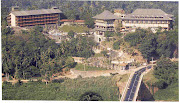
Relax & enjoy the surrounding of colonial era at St. Andrew's Hotel, Nuwara Eliya. At an elevation of 5000 ft. above sea level, amidst mist shrouded green mountain peaks in Sri Lanka's Central Highlands, this colonial residence still retains the pace and style of life of the colonial era of Ceylon.
Wednesday, 25 June 2008
SRI LANKA HOLIDAYS: Jetwing St. Andrews
SRI LANKA HOLIDAYS: Elephant Corridor


SRI LANKA HOLIDAYS: Elephant Corridor, Sri Lanka
Tour the beautiful island of Sri Lanka with My Sri Lanka Holidays. Contact Riolta Lanka Holidays today.
Leave your worldly cares behind. Breathe the spirit of wilderness. Rejuvenate yourself, surrounded by thousands of acres of jungle beside a lake, against the backdrop of the breathtaking Kanadalama Hills of Sri Lanka Holidays.
With its all-suite concept of luxury accommodation, the Elephant Corridor Luxury Boutique Hotel, Sigiriya, allows you the luxury of relaxation in absolute privacy. Pamper yourself by dining on a private terrace with garden. Take a Sri Lanka Holidays dip in your own private plunge pool. Unwind with a drink at your en-suite bar. Or, perhaps, just relax in bed and gaze across the jungle plain at the Lion Rock Citadel Sigiriya on the horizon.
Follow your biological clock. Have your meals served when you are hungry, in your own preferred style, en-suite, at our specialty restaurants, or even outdoors under the trees.
Surrounded by Sri Lanka Holidays wildlife sanctuaries and the ruins of ancient cities, the Elephant Corridor Luxury Boutique Hotel allows you to experience, both, natural and man made, in a way that is in harmony with nature. At the same time, it offers an exclusive kind of hospitality, spoiling you with your individual requirements in star class luxury during your Sri Lanka Holidays.
Leave your worldly cares behind. Breathe the spirit of wilderness. Rejuvenate yourself, surrounded by thousands of acres of jungle beside a lake, against the backdrop of the breathtaking Kanadalama Hills of Sri Lanka Holidays.
With its all-suite concept of luxury accommodation, the Elephant Corridor Luxury Boutique Hotel, Sigiriya, allows you the luxury of relaxation in absolute privacy. Pamper yourself by dining on a private terrace with garden. Take a Sri Lanka Holidays dip in your own private plunge pool. Unwind with a drink at your en-suite bar. Or, perhaps, just relax in bed and gaze across the jungle plain at the Lion Rock Citadel Sigiriya on the horizon.
Follow your biological clock. Have your meals served when you are hungry, in your own preferred style, en-suite, at our specialty restaurants, or even outdoors under the trees.
Surrounded by Sri Lanka Holidays wildlife sanctuaries and the ruins of ancient cities, the Elephant Corridor Luxury Boutique Hotel allows you to experience, both, natural and man made, in a way that is in harmony with nature. At the same time, it offers an exclusive kind of hospitality, spoiling you with your individual requirements in star class luxury during your Sri Lanka Holidays.
SRI LANKA HOLIDAYS: Jetwing Vil Uyana


Jetwing Vil Uyana , close to The Lion Rock Citadel Sigiriya, Sri Lanka
Drawing from the local, rural traditions, the buildings grow not out, but into the landscape. The ‘habitats’ naturalized by local flora and fauna will create the timelessness of a healthy eco system providing the setting for peace and tranquility. With the first man-made lakes since King Parakramabahu the great’s era in the 11th Century, this exciting feature allows for the first time in Sri Lanka dwellings to be built over water.
SRI LANKA HOLIDAYS: Saman Villas

Saman Villas, Induruwa, Bentota, Sri Lanka
Saman Villas is one of the most luxurious small hotels at Bentota in Sri Lanka.
Magnificently perched on a rocky headland dividing two long seemingly endless, surf-swept un-spoilt beaches of golden sand, backed by dense green coconut plantations, Saman Villas provides your Sri Lanka Holidays, sweeping views the surrounding landscape as well as that of the Indian Ocean.
While the tranquil environment is disturbed only by the sound of sea gulls and the waves breaking on the rocks below, the luxurious & soothing atmosphere of the suits & rooms is bound to overwhelm you with the truest sense of Sri Lanka Holidays.
Monday, 23 June 2008
Sinhalese tradition of referring to Mahawamsa & other Sinhalese Buddhist books


Tour the beautiful island of Sri Lanka, the Land of Delights with My Sri Lanka Holidays. Total Holiday Experience awaits you in the beautiful tropical isalnd.
Sinhalese tradition of referring to Mahawamsa & other Sinhalese Buddhist books
Agricultural & Financial interests of
1993 REPRINT ISBN 81-7013-102-2 Footnotes in italics are mine.
Quote
Appendix A
Answers given by some of the best-informed Candian (1) Priests, to Questions put to them by Governor Falk (2), in the year 1769, respecting the ancient Laws & Customs of their Country.
A. If the King be a man of great abilities, well skilled in ancient laws & usages, acquainted with the practices of former Kings, & properly versed in religious knowledge, there are some matters which he may decide accordingy to his own pleasure; but there are, likewise, many others which he cannot determine without consulting the ministers & the people. Any doubts which exist upon this subject may be resolved by a reference to the book entitled Mahawamsa; wherein an account is given of the things which were done at the sole will & pleasure of King Parakrama Bahu, who ruled Lakdiwa (3), resided at Polonnaruwa; as well as of things done by him, after consulting his ministers.
A. It is said, in the book entitled Niti Sastra, that the basis of all good government is a victory over the senses: these are, Sights, Hearing, Smell, Taste, and Touch. A victory over the first is gained, when the wife of another can be beheld without giving rise to any wish or longing for her; over the second, when slander & abuse can be heard without exciting emotions of anger; over the third & fourth, when the organs of smelling & tasting are not immoderately delighted with perfumes & delicate viands; over the fifth, when the body is not captivated with its peculiar enjoyments. The first step towards the subjugation of the senses, is, reverence to parents, teachers, & elders; frequenting the society of wise persons is the source of that reverence; in order to be admitted into such society, learning must be acquired; by means of the wisdom derived from learning, a victory over the inclination is obtained, & that victory ensures the completion of every wish.
These are the Rules which ought to guide the conduct of Kings; a confirmation of which fact will be fond in the book entitled Tela Patta Jatake.
A. There are ten virtues which a King is enjoined to practice.
1. Charity; viz. giving rice & cloth to priests, Brahmins, & poor people.
2. Religion; viz. constantly maintaining the ordinances of Buddha
3. Liberality; viz. bestowing fields, gardens, & other valuable property.
4. Uprightness; viz. being void of deceit
5. Mercy; viz. not being of an obdurate mind
6. Temperance; viz. mortification of sensual desires
7. Placability; viz. not continuing to be angry after the cause of displeasure has ceased
8. Humanity: viz. not punishing, tormenting, or molesting innocent persons
9. Forbearance; viz. not being angry at faults before they have been well inquired into.
10. Impartiality; viz. shewing no undue preference to any one
Unquote
(2) British colonial governor of
(3)
Wednesday, 18 June 2008
SRI LANKA HOLIDAYS: The role of Mahavamsa in the national life of Sri Lanka


SRI LANKA HOLIDAYS: The role of Mahavamsa in the national life of
Quote
Hardly any Sri Lankan with a modicum of Sinhala education & a minimum familiarity with the history of the country is unfamiliar with the name of Mahavamsa & with the fact that it is the main source for the national history. Scarcely would a sermon in a temple or a speech on any national occasion pass without a reference to it & the narration of one or more episodes from it. The personages whose lives & careers figure in it are regularly upheld as examples for emulation: King Asoka for his piety & munificence; King Devanampiya Tissa for his devotion to Buddhism; King Duttha Gamini for his valour, patriotism & dedication to the Sangha; Sirisangabodhi for his non violence & self sacrifice; Elara for his sense of justice; King Wattha Gamini for his perseverance & his wife Somadevi for her unwavering loyalty to he r husband.
Some scholars who had observed this preoccupation of the people with their historical tradition-with the Mahavamsa as its centerpiece-have attempted to explain how it had arisen & how its persisting presence affects the life of the new nation. In this impassioned oral statements, Heinz Bechert has been reported as describing it as “the Mahavamsa complex of the Sinhalese” & giving it an unfavourable connotation. E.F.C. Ludowyk analyzed this phenomenon in some details:
“Take Sinhalese, its major group. Beneath the patina of several centuries of civilization, of considerable sophistication of thought & sensibility there lurks something of an older world, not properly assimilated with what replaced it or with the new, & even now disturbing by its presence. This may be little more than the effect on the observer of the complexity of the culture of a mixed group of people with long & various traditions. But this is no ordinary complex; it deepens as the major events of a long history are unfolded. At all times there seem to have been continually present in the culture seemingly incongruous & irreconcilable elements.”
“The Mahavamsa story, the commentary’s elaboration of one detail of it, may yield interpretations different from those suggested here. But to many Buddhists in contemporary Ceylon, whether they have considered either Mahavamsa or Samantapasadika comment on it, it would appear that the test of the sasana in the country-however that word of multifarious meanings is glossed-is its official status as institution identified with the Sangha, patronized by the state & patronizing it. The records of 1500 years ago are not the dead hand of the past, they are the voice of the living.”
“Nationalism in the East has long been regarded as the twentieth–century acceptance of an outdated Western mode, the result of the heady intoxication which followed upon draughts of western Europeans political thinkers. It would seem that it was known in
“Its (i.e.Mahavamsa) thirty-seven chapters arranged its own highly subjective record of the past so decisively that later history was influenced by it. The clearest outlines of its own reconstructions of its events were: the identification of religion with the state; the dependence of the stability of the country on this; the development of a strong sense of Sinhalese nationalism out of the opposition to the Tamils. What was left out of the chronicler, what was slurred over, what was added & amplified seem to have sprung the need to mould the traditional material in his own way.”
As regards trying to develop ‘a strong sense of Sinhalese nationalism out of the opposition to the Tamils,” Ludowyk would have been fair if he also mentioned that the author of the Mahavamsa was objective enough to assess the reigns of Damila invaders not once but twice as ‘just”, i.e. Sena & Guttika reigned twenty-two years justly (dhammena)-21.11; Elara reigned forty-four years being impartial to the friends & enemies in lawsuits (Majjhatto mittasattusu)-21.14. Both these reigns were after the introduction of Buddhism. What Ludowyk has in mind is the elaboration of the story of Dutthagamani to a veritable epic of heroism, with strongly expresses sentiments such as the child Dutthagamini’s assertion on territorial inadequacy on account of the presence of the Damilas in the north & the dubious account of a justification by the Sangha of the killing of non-believers.
Elsewhere, however, Ludowyk realized that he should lay his accusations wider. Apparently, he was convinced that the Mahavamsa was only a systematized epitome or a synthesis of a broad-based historical tradition which, in itself, had given a shape, as structure & sequence to a mass of myths, legends & the like. So he implicated the entire Sangha, saying, “Of all the influences of men & women upon the Sinhala, his (i.e. the bhikku’s) has probably been the strongest. To overestimate it is impossible. This bhikku, a figure as shadowy as those in legends in which he dealt, synchronized oral traditions, & an ancient chronicle with legends of the Buddha, & composed the Mahavamsa, the Pali Chronicle of the early kings of Sri Lanka, dealing with the (history) of the island from the very earliest times to the fourth century A.D. His story gave the Sinhalese a consciousness of the special Buddhist destiny of the island & of their role as defenders of the faith, both of which are at the present day much more potent than sheaves of facts gleaned from any of the fields of history or economics. The early legends… have excited a strong pull not only on the story of
But something more needs to be clarified with regard to the responsibility assigned to the Mahavamsa for generating ‘a consciousness of the special Buddhist destiny of the island.” It is true that Sinhala Buddhists of all levels of education do have a deeply entrenched conception of the special role which
It is with justifiable pride that they would point out the splendid achievements in art, architecture & literature which have been inspired by Buddhism & acknowledge the recognition of many countries of
The Pali Canon, by itself, is to the lasting credit of the Sinhalas in that nowhere else was such a complete & authentic record of the word of the Buddha preserved, studied, elaborated in commentaries, & transmitted uninterruptedly in both writing & a tradition of Monastic education. A multitude of epigraphical records & an ample array of literary works enable the Sinhalas to trace the development of their language over at least twenty-three centuries & the flowering of there skils in literary & political expression for over a millennium.
This multi-faceted cultural heritage has a distinct & unique characteristic. Nowhere else in the world is there a similar record of an identifiable national entity which has preserved their language & religion for a long period in history & extended its cultural heritage far beyond the confines of their territory.
It is awareness & appreciation of this exceptional cultural heritage & role, which gives the Sinhala Buddhists their proudly acclaimed cultural identity. Whether it is an advantage or otherwise, whether it is an asset or a burden, it is there & it has all along impelled them to build upon it & be inspired with greater vision.
The time-tested durability of this cultural identity has led to an inescapable feeling of mission & commitment which Ludowyk describes as a consciousness of the “role as defenders of the faith.” Certain critics & cynics alike have not hesitated to dub it an indigenous brand of chauvinism. Whether such a description is accurate or fair or otherwise, a Sinhala Buddhist ideological commitment has found expression in a substantial patriotic literature in Sinhala. Further it has been the prime motivational factor in the rise of religio-nationalistic forces whenever the cultural identity was threatened due to foreign influence or internal causes. National heroes of
Unquote.
Prolegomena of translation of Mahavamsa by Dr. Ananda W. P. Guruge.
Monday, 16 June 2008
SRI LANKA HOLIDAYS: King Parakrama Bahu the Great


SRI LANKA HOLIDAYS: King Parakrama Bahu the Great (1164-1196 AD) Part 1
Tour the beautiful isalnd of Sri Lanka with Riolta Sri Lanka Holidays, Sri Lanka.
Culavamsa
At a favourable moment & under a lucky star the Ruler (now) without rivals held the happy festival of the coronation. The loud noise of the diverse kind of drums was then terrible as the raging of the ocean when lashed by the storm wind of the destruction of the world. Elephants equipped with gilded armour made the royal road look as if it were traversed by lightening-flashing cloud mountains. The whole town, in which the colours of the horses gave rise, as it were to waves, was in agitation like the ocean. By the variegated umbrellas & wreaths & the rows of golden flags the heavens were hid as it were, on all sides. Garments were shaken & fingers snapped the inhabitants of the town sent forth the cry: Live (O King)! Live! Covered with arches of bananas & thickly studded with jars & wreaths the whole universe consisted of a mass of festivals. Songs of praise were hared hymned by many hundreds of singers & the smoke of (kindled) aloe wood filled the firmament.
Unquote Culavamsa being the more recent part to the Mahavamsa translated by Wilhelm Geiger 1929, AES reprint 81-206-0430-X & 81-206-0431-8
Saturday, 14 June 2008
SRI LANKA HOLIDAYS: Sanskrit & Sinhala


Sanskrit & Sinhala
Europe and the Indo-European Languages From the desk of Fjordman on Fri, 2008-06-13 21:35
"The Sanskrit language, whatever be its antiquity, is of a wonderful structure; more perfect than the Greek, more copious than the Latin, and more exquisitely refined than either, yet bearing to both of them a stronger affinity, both in the roots of verbs and in the forms of grammar, than could possibly have been produced by accident; so strong indeed, that no philologer could examine them all three, without believing them to have sprung from some common source, which, perhaps, no longer exists: there is a similar reason, though not quite so forcible, for supposing that both the Gothic and the Celtic, though blended with a very different idiom, had the same origin with the Sanskrit; and the Old Persian might be added to the same family, if this were the place for discussing any question concerning the antiquities of Persia."As the linguist Trautman has later said, "The modernity of the formulation is remarkable: the grouping of Sanskrit, Greek, Latin, Gothic (Germanic), Celtic, and Old Persian; their mutual resemblance in lexicon and grammar; the conception of their relationship as co-descendants of a lost ancestral language – these are exactly the views historical linguists hold today."
Jones was obviously not the first person to notice that various languages showed signs of being related. This was suspected by other scholars before him. But he was the first to connect European languages to non-European ones in this way. According to Nicholas Ostler in Empires of the Word:
"The majority of IE languages currently spoken belong to six large sub-groups of IE. Modern Irish and Old Irish are members of the Celtic sub-group, which also includes Welsh, Scots Gaelic, Breton, Cornish and Manx. Sinhala is part of the large Indic family, comprising most of the languages currently spoken in North India and Pakistan, Sanskrit and the Middle Indian Prakrits. English is a member of the Germanic branch; this includes Dutch, German and the Scandinavian languages among living languages, as well as earlier stages of these languages, such as Old English, Old High German and Old Norse, and other extinct varieties such as Gothic, once spoken in south-east Europe and southern Russia. The other large sub-groups are Romance and Slavic in Europe, and Iranian in Asia. All of these sub-groups of IE were themselves recognised as linguistic families before Jones' identification of the larger IE family cited above."To read the complete article click this link: Europe & the Indo-European (IE) Lanaguages
Wednesday, 11 June 2008
SRI LANKA HOLIDAYS:Traitors who live in glass houses

Traitors who live in glass houses
It really made me chuckle when I read that the Opposition Leader, Ranil Wickremesinghe, recently called Defence Secretary, Gotabaya Rajapaksa, a "traitor." Wickremesinghe, of all people, shouldn't be throwing stones. He lives in the biggest glass house of them all - and his public record is completely open and available for anyone to examine.
When I was in Sri Lanka recently (end of March) I toured the newly-liberated Eastern Provinces. I visited a Buddhist temple in Toppur (Trincomalee area), by the name of Sela Pabbata Vihara.
At the top of the Pagoda were large twin radio towers that had been used by the LTTE to broadcast their propaganda throughout the area, and to manage their terrorist warfare against the people of Sri Lanka.
I was curious to learn about the origin of these towers, especially since they were pointing skyward from the pinnacle of a sacred Buddhist monument, which had been destroyed during the process of affixing and supporting them. So I asked my hosts a few questions.
I learned that these radio towers had been imported from Norway, and then secretly smuggled into the area while Wickremesinghe was Prime Minister; according to the people I talked to, with his knowledge. No Customs duties were paid, nothing was "declared," and they went right on through the shipyard by truck to the LTTE in Trincomalee.
The radio towers arrived in a large sea container that is still on the premises. I was told that the container was a self-contained radio broadcast station that was set up like a "kit" - complete with its towers on the Vihara site. The LTTE took the contents of the container with them when they were ejected from the area, but the towers still stand as a testament to his complicity with the terrorist enemy.
So now, who is the "traitor"? I could site several other examples of Wickremesinghe's questionable ties to the LTTE, like the CeaseFire Agreement he signed with Prabhakaran and the LTTE without telling anyone - including his own Cabinet, the Government, or the people of Sri Lanka. Under this traitorous Agreement, any land areas controlled by the LTTE at that time would be ceded to them as part of a separate Tamil state.
At the time, Sampur, Toppigala, and other areas were under their control in the East. We all know how much land they used to control in the North before Gotabaya went into action. I would call it a faux pas if it wasn't so tragic and insulting, but Wickremesinghe actually had the gall to invite the Portuguese to celebrate the 500th anniversary of their invasion of our island country.
The Portuguese occupation, as everyone knows, was the beginning of the end of our ancient culture and civilisation, our independence as a nation, and our individual freedoms. Do I hear the word "traitor" anywhere here ? I have known Gotabaya Rajapaksa and his family for many years.
I know, but perhaps many do not know, of his many acts of selflessness and heroism while in the Sri Lankan Army prior to his move to America. When he first joined the Army in 1972 he was posted to the Signals Corps, a safe and secure position where he could have stayed for the duration of his career. Instead, he voluntarily transferred to the Sinha Regiment and Rajarata Rifles, and later he joined the 1st Battalion of the Gajaba Regiment after it was raised on October 14, 1983.
In other words, he put himself directly on the front line when he didn't have to. As an infantry officer, Gotabaya Rajapaksa was the leader in many historic battles fought by the Sri Lankan Army against the LTTE.
He led his men in the first military operation conducted in Jaffna - "Operation Dash Up" - during the early 1980's, and in other battles as well, including "Operation Liberation" (Wadamarachchi Battle, with Kobbekaduwa and Wimalaratna, two other great leaders who were assassinated by the LTTE) and "Operation Trivida Balaya" (Rescue of Jaffna Fort).
Under his leadership many soldiers' lives were saved, and I'm sure there are a number of these honoured veterans who would be happy to come forward and attest to Gotabaya's intelligence, military ability, leadership, honesty, loyalty, and spirit.
One particular individual with whom I am very well acquainted, Prasanna Wickramasuriya, was with Gotabaya during this entire period, and he would be glad to make himself available to answer any questions.
Gotabaya was a highly-decorated military officer when he retired from the Army after twenty years of distinguished service, and then immigrated to the United States. His record was unblemished, and he left Sri Lanka with a clear conscious and a clean record.
While he was working as a computer systems analyst at Loyala University in Los Angeles I saw him on a regular basis.
At least once a month he would come to my temple and discuss issues pertinent to Sri Lanka. He was very concerned about the LTTE problem, as well as other social, educational, and health issues on the island.
After the tsunami he personally donated $5,000 to our Dharma Vijaya relief fund, and he allowed me to collect additional funds from colleagues at the university.
I sincerely hope that Wickramasinghe and his colleagues will refrain from their destructive and inappropriate attacks on our Defence Secretary, and get behind him so he can effectively do his job. Wickremesinghe continues to travel around the world and badmouth Sri Lanka for various and fabricated reasons.
It is obvious that he does this for personal gain, and perhaps to tip the scale of world opinion in favour of the LTTE. This man is doing so much damage to the reputation of our country that he should kindly remember that he lives in that big glass house up on the hill - and keep quiet for a change.
May I offer some advice to you, Wickremesinghe ?
I have always admired your persistence and perseverance - they are extraordinary, and well-documented. Instead of maliciously, and with hatred and ill-will, attack the Government, why don't you re-direct your energy and use it to help build a better Sri Lanka? Perhaps then you will create for yourself a highly-respected and well-remembered legacy of public service.
This legacy could serve as a reminder that it is, in fact, possible for national leaders to re-think their positions, and make changes in both their behaviour and their policy for the greater and higher good.
I am very pleased that Gotabaya, who is so well-qualified for the job, was called back and sacrificed his comfortable life in the US to take the helm at the Defence Ministry.
It gives me tremendous peace of mind to know that such a competent, incorruptible, and compassionate leader is in charge of protecting our country, and liberating it from the demoralising and corrosive influences of the LTTE terrorists.
I have confidence that he will complete his mission as directed by the President, and that one day soon I will be able to tour the beautiful northern provinces, and envision their re-entry into a peaceful, united Sri Lanka.
To quote from the Dhammapada, and to offer it to Gotabaya: Just as a solid rock is not shaken by the storm, even so the wise are not affected by praise or blame.
END OF THE ARTICLE BY VEN. WALPOLA PIYANANDA, U.S.A
Quote Paul Harris
"There was a glimmer of hope through the activities of the Long Range Patrol Group. Disgracefully, the group was betrayed in its 'safe" house in 2002, its agents compromised & the operation willfully deserted by the Wickremasinghe government. As a result, a whole intelligence network & a most effective organisation were brought down from within. In most countries, TREASON TRIALS would have followed... This strategy has been used successfully by the British in the Northern Irlend, by the Omanis & Baharinis, by the Indonesians, & to a lesser extent by the Indians ....
Unquote PAUL HARRIS (specialist contributor on global insurgency & terrorism for Jane's Intelligence Review)
Above is an excerpt from the book "Peace in Sri Lanka" by World Alliance for Peace in Sri Lanka ISBN 955-1165-00-4 Year 2005 Online web orders www.vijithayapa.com email: vybooks@sri.lanka.net
Sunday, 1 June 2008
SRI LANKA HOLIDAYS: King Devanampiya Tissa-Glorious days of Indo Sri Lanka relationship


SRI LANKA HOLIDAYS: King Devanampiya Tissa-Glorious days of Indo Sri Lanka relationship.
Tour the beautiful island of Sri Lanka, The Land of Delights with My Sri Lanka Holidays, Sri Lanka. The Total Holiday Experience awaits in the The Land of Delights.
(In the times of gods, all treasures abound, & prosperity looms high.
Following is an excerpt from Dr. Ananda Guruge’s English translation of Mahavamsa narrated in Pali. Subtitles in Italics are mine
Delighted on seeing them, the king thought, ‘My friend, Asoka the Righteous & none else deserves theses priceless treasures. I shall give them to him. Those two kings, Devanampiyatissa & Asoka the Righteous had been unseen friends for a long time.
The king then appointed these four persons-namely, nephew Maharittha, the chief minister, a Brahman, a minister & a treasurer, entrusted the following priceless treasurers to them & sent them, attended by a multitude of soldiers- the three kinds precious stones, the three wagon-poles, a conch-shell winding to the right & eight kinds of pearls.
Embarking at Jambukola, they arrived comfortably in the port in seven days & thence in a week they reached Pataliputta. They gave those presents to Asoka the Righteous. Seeing them he was pleased & thought, “Here I have no such treasures.’ Being delighted, the king bestowed on Arittha the rank of a commander of the army, on the Brahman the chaplainship, on that minister the rank of Dandanayaka & on the treasurer the position of a guild-chief
He gave them abundant provisions & lodgings. He consulted the minister & looked for gifts in return. The lord of men, in due course, gave as gifts to his friend requisites for consecration, specially the accessories; a chowrie, a diadem, a sword, a parasol, sandals, a turban, ear-ornamanents, a chain, a pitcher, yellow sandal-wood, a set of garments which needed no washing, a costly handkerchief, unguent brought by Nagas, dawn coloured earth, water from the Anotatta-lake, Ganga water, a conch shell winding to the auspicious direction, cosmetic powder maiden, golden vessels & objects, costly litter, yellow & emblic myrobalan, precious ambrosial medicines, & six thousand wagon-loads of rice brought by parrots.
He sent through the envoys this gift of the true Dhamma: “I have taken refuge in the Buddha, the Dhamma & the Sangha. I have declared myself a lay-disciple of the Faith of the Sakya son. O best of men, you, make your mind to take delight in these supreme treasures & with faith, take refuge in them.”
He honoured the ministers of his friend & dispatched them, saying, “Consecrate my friend again.” The ministers had stayed five months & had been excessively cared for. The envoys left on the first day of the bright half of the month of Vesakha (April-May). They embarked at Tamalitti & disembarked at Jambukola. Arriving here on the twelfth day, they saw the king.
The envoys handed the gifts to the lord of Lanka. He extended to them much hospitality & honour. These ministers, loyal to their master, had consecrated the king of Lanka on the first day of the moon in the month of Maggasira (November- December). Intent on the welfare of their master, they conveyed the message of Asoka the Righteous &, for the second time, consecrated him who rejoiced in the welfare & happiness of Lanka.
Thus on the full-moon day of Vesakha, he in whose name was implied the word “Devanampiya” –the giver of happiness to his people-was consecrated in Lanka where there was grand festivity everywhere.
Unquote Mahavansa
Quote Dr. A. V. Suraweera’s English translation of Sinhalese chronicle Rajavaliya (Line of Kings) written in the Pali language
Unquote Rajavaliya ISBN 955-599-210-X
If ever a single event shaped & signalized the course of a nation’s destiny, it was the Mauryan Buddhist mission in
With the incomparable land-mark in the nation’s history, Buddhism became the State religion. The whole
bunpeiris
Subscribe to:
Posts (Atom)


 Posts
Posts