Tour Sri Lanka with "Riolta Lanka Holidays" to enjoy High Value, High Definition Sri Lanka Holidays.
We Reveal For You To Revel
To end your search for ultimate holiday destination visit the "Land of Delights" , Sri Lanka & get overwhelmed with Sri Lanka holidays bounty of tourist attractions. Enjoy "Total Holiday Experience" while you are being pampered by world class eco-chic resorts & hotels.
PLS CLICK THE IMAGE FOR HOME PAGE just in case you bumped into a highly ranked post such as 'EPIC BATTLE' instead of my Home page with all the posts like a long wave (eh!) at high tide.
If there had been half a dozen such men as me to lead there would not be a white man in Kandyan...
YEAR 1848. THE MATALE REBELLION, KANDY, GATEWAY TO CENTRAL HIGHLANDS, AGAINST THE BRITISH. The best tribute to Weerahennadige Francisco Fernando alias Puran Appu of MORATUWA (that's my hometown, yours truly bunpeiris) WESTERN COASTAL BELT TO THE SOUTH, was paid by his enemies. Governor Torrington wrote to the Colonial Secretary (The letter can be seen at Durham University. "I remind you of the last words of Puran Appu. He held up his hand and said, if there had been half a dozen such men as me to lead there would not be a white man living in the Kandyan Provinces. Let's visit the royal city of Kandy with Sri Lanka Holidays.
Riolta Lanka Holidays (Pvt.) Ltd., Sri Lanka
Click the image for a 108 webpage comprehensive website on tourist attractions of the Land of Delights, Sri Lanka. ************* www.rioltalankaholidays.com OR www.mysrilankaholidays.com
RIOLTA LANKA HOLIDAYS Presents Modern History of Sri Lanka
Sri Lanka Holidays take you to ancient kingdoms of Sri Lanka. Let's visit Gal Vihare, Polonnaruwa, Sri Lanka with Sri Lanka Holidays. ************** "The true Brahmin is one who is rid of passion, hatred & pride; who is restrained in body, speech & mind; profund in intellect & wise; 'mellow as the moon, pure, serene & unperturbed" Gautama Buddha
Riolta Lanka Holidays
Venture into Adam's Peak Sri Pada, Sri Lanka with Sri Lanka Holidays. In this romantic pinnacle (7360 ft) the land rises up grandly i one last gesture of challenge to the ses-but it is the last. If you look south from Adam's Peak, you are facing the ocean that has no limit-at least no limit short of the ice walls of the polar seas. According to the Buddhist tradition, the Master ( Buddha) alighted here on his farewell visit to Ceylon, & planted the impression of his foot upon the rock. Not only that,but all the four previous Buddhas in remote & mystic ages, came to this sacred spot, & left some mark of their paasing. And from generation to generation, Adam's Peak has lured men up its cruel slopes: & in our own age pilgrims of all creeds & nationalities crowed thither in thousands. They are, however, chiefly Buddhists.
Riolta Lanka Holidays
LORD JUPITER. By Jupiter, we will go from strength to strength with Sri Lanka Holidays. Astrologically Jupiter is associated with the principles of growth, expansion, prosperity and good fortune; and a person's inner sense of justice and morality and their ideals and higher goals. Jupiter governs long distance and foreign travel, higher education, religion and the law. It is also associated with the urge for freedom and exploration, humanitarian and protecting roles, and with gambling and merrymaking or 'joviality'. The first-century poet Manilius described Jupiter as temperate and benign, and the greater benefic. It was regarded as warm and moist in nature, and therefore favourable to life.
Riolta Lanka Holidays
Sri Lanka Holidays pay respect to ancient science. SRI YANTRA. By Jupiter, we will go from strength to strength***************************** Yantras come from the more than 2000 years old tantric tradition. A yantra is the yogic equivalent of the Buddhist mandala. Sri yantra is called the mother of all yantras because all other yantras derive from it. The Sri Yantra is a configuration of nine interlacing triangles centred around the bindu (the central point of the yantra), drawn by the super imposition of five downward pointing triangles, representing Shakti ; the female principle and four upright triangles, representing Shiva ; the male principle. Man's spiritual journey from the stage of material existence to ultimate enlightenment is mapped on the Sri Yantra.
Riolta Lanka Holidays
It is not upto you to finish the work. But neither are you free not to take it up. (Avot 2:16)
Sri Lanka Holidays invite you all to click the image & read "The Literary Canon Vs Barbaric ignorance" by bunpeiris
www.bunpeiris.com
Warmest greetings from The Land of Delights, Sri Lanka to all Ladies & Gentlemen, Guys & Babes! And to kids too. Hi, partner. Right Stuff in the left hand side are mainly imports. Right stuff on the right hand side are mainly exports. No sexports. This is a family show free of charge Enjoy life. Be good too. In the center is my two pennies worth. Of course, you may comment. By the way, I cannot sideline American Ellen, she has taken the center stage limelight. We reveal for you to revel. Cheers!!!!!!! bunpeiris B. Upul N. Peiris, Moratuwa, Sri Lanka
"It may be that you are not yourself luminous, but you are a conductor of light. Some people without possessing genius have a remarkable power of stimulating it." Sherlock Holmes to Dr. Watson : The Hound of Baskervilles
bunpeiris.com ****Click image just in case you are looking for ABOUT ME
That's me. bunpeiris ** Japan was already defeated in the theater of war. Japan was about to negotiate for its surrender. Japan was only defending its land in its own land. Then The Americans Nuclear Bombed the Janpanese: Crimes against Humanity.. As much as boys are boys, cow boys are cow boys. Vietnam then & now Iraq amidst numerous other invasions. It never ends. Next is Iran. SRI LANKA HOLIDAYS SUPPORT IRAN.
www.bunpeiris.com
Riolta Lanka Holidays (Pvt.) Ltd. , Sri Lanka
bunpeiris
Om Cheers Om
Sri Lanka Holidays is brought in by Riolta Lanka Holidays (Pvt.) Ltd., Sri Lanka. Riolta We Reveal for you to Revel.
Manadil Urdi Vendum. Sri Lanka Holidays stress the value of courage
Moral courage is not merely a virtue; it is thevirtue. Without it there are no other virtues. All other virtues do not become virtues unless it takes moral courage to exercise them. **** I have never met a man with moral courage who wouldn't,when it was really necessary, face bodily danger. Moral courage is a higher & rarer virtue than physical courage. Read more on courage at Sri Lanka Holidays.
General Sir William Slim, former Commander-in-chief, Allied Land Forces in South-East Asia
Courage is the first of human qualities because it is the quality which guarantees the others. Socrates
"Life shrinks or expands in proportion to one's courage" Anais Nin
"Fanaticism has nothing to do with Courage." bunpeiris
"All I Ever Really Needed to Know I Learned in Kindergarten" Robert Fulgham
We commemorate Robert Fulgham at Sri Lanka Holidays. Share everything Play fair. Don't hit people. Put things back where you found them. Clean up your own mess. Don't take things that aren't yours. Say sorry when you hurt somebody. Wash your hands before you eat. Flush. Warm cookies and cold milk are good for you. Live a balanced life.
Educated Morons, the Useful Idiots of the Terrorists
Sri Lanka Holidays reminds you of the richness of our planet
"I’m so dazzled by the richness of the world that I think fiction is not quite catching it." V. S. Naipaul Not quite, Sir Vidya, not quite. "Russian women are the most talented & beautiful in the World" Russian president Vladimir Putin at Sardinia by the side of good old Silvio in April 2008 No doubt, Mr. President, no doubt indeed.
Wine of the country in a wet ride
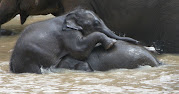
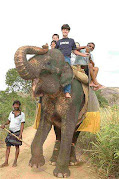
Pinnawela Elephant Orphanage, Sri Lanka
This is my kingdom & on me is my queen
Cuter & cuter
Babe petting baby elephant
Buxom buddies
This world is mine & I am all yours. With the exception of Lion, I have no rivals. You know, Lion is the only guy who dine without fear, even I have a glance back while dining, but don't tell your mummy, ok., honey
May all beings free from anger May all beings free from all pain and suffering. hatred. May all beings free from greed and selfishness May all beings free from fears and anxiety. May all beings free from all pain and suffering. May all beings free from ignorance and delusion. May all beings free from all negative states of mind. May all beings be happy and peaceful. May all beings liberated from bondages. May all beings live in Peace and Harmony. May all beings experience the Nibbanic peace within. We are at peace with Sri Lanka Holidays.
Riolta Lanka Holidays
Click the national flag of Sri Lanka to read unbroken recored History of Sri Lanka since 543BC.
Riolta Lanka Holidays
Click the image of Buddhist Flag for Sri Lanka travel Guide to read at Sri Lanka Holidays
Ceylon Sapphires from Sri Lanka
Sri lanka Holidays take you to Ratnapura ( City of gems), Sri lanka. Brilliant engagement ring Ceylon Sapphires are second in hardness only to Diamonds. World class int'l award winning jewellery designers at leading shops in Sri Lanka are at your service, at you beck & call. Ring, wedding & honeymoon all in the Land of Delights, Sri Lanka. Buy Ceylon Sapphires while on tour with Sri Lanka Holidays.
Jaffna, Sri Lanka. Elementary, Dr. Watson, Elementary!
The inhabitants of Jaffna in the year 1803 QUOTE page 48 The inhabitants of Jaffna consist of a collection of various races. The greatest number are of Moorish extraction, & are divided into several tribes, known by the names of Lubabalis, Mopleys, Chittys, & Choliars; they are distinguished by wearing a little round cap on their close shaven heads. There is also a race of Malabars found here somewhat differing in their appearance from those on the continent. These different tribes of foreign settlers greatly exceed in number the native Ceylonese in the district of Jaffna. UNQUOTE Above is an extract from "An Account of The Island of Ceylon" by Robert Percival Esq. of "His Majesty's 19th Regiment of Foot" Published in London, Great Britain in the year 1803 AES reprint ISBN 81-206-0563-2
Tamil district of Jafanapatam, Sri Lanka in the year 1505 QUOTE Page 4 Turning to Ceilao, the chief King & Kingdom there were those of Cotta; this King the others reverenced with the respect of due to an Emperor. UNQUOTE Quote footnote in the same page The king who ruled at Kotte was the Suzerain of the entire country. Tributary Kings ruled over the Tamil district of Jafanapatam in the North, & the Kanda Uda Rata in the centre. Unquote Above is an extract from "The historic Tragedy of the island of Ceilao" by Captain Joao Ribeiro, Lisbon, Portugal, 8th January 1685. Translated from Portuguese by Dr. PAUL E. PIERIS, Colombo, Sri Lanka in the year 1947 AES reprint ISBN 81-206-1334-1 You will not be touring in Jaffna with Sri Lanka Holidays.
BRAWN & BRAIN:The Last Samurai: The Life and Battles of Saigo Takamori by Mark Ravina
On September 24, 1877, Saigõ Takamori, one of Japan's most loyal and honored samurai, died in the bloodiest conflict Japan had seen in over two hundred years, a battle led by Saigõ and his band of loyal students. Now, more than 125 years after his death, Saigõ still remains a legendary yet enigmatic figure in Japan. Why would Japan's greatest warrior, whose sole purpose was to serve his country, set in motion a civil war and lead a group of rebel soldiers to overthrow the government that he had personally helped to restore? The Last Samurai sets forth to demystify Saigõ's life, his machinations, and the dramatic historical events that shaped the life and death of Japan's favorite samurai.Exiled for misconduct, Saigõ was pardoned in 1864 and called back to the mainland to train a group of Satsuma warriors. Their mission was to seize control of the imperial palace and restore the imperial house to its former glory. Saigõ's coup was successful, and in 1867 he led the drive to destroy the shogunate and to create a powerful new state. But with Saigõ's victory came a crushing defeat: in his drive to modernize Japan, the Meiji emperor, whom Saigõ had helped bring to power, abolished all samurai privileges, including their ancient right to carry swords.Now an acting member of a modernizing Meiji government, Saigõ was given command of the new Imperial Guard, Japan's first national army in nearly a millennium. Saigõ supported many of the government's Western-style reforms, but he was torn by the sense that he was betraying his most stalwart supporters. Deeply ambivalent about the government he hadhelped create, Saigõ sought to end his career with a final dramatic gesture: he sought to go as imperial envoy to Korea, where he would insist that the Korean king recognize the Meiji emperor. When his plan was denounced as reckless, Saigõ resigned from government, returned to his native Satsuma, and opened a military academy for former samurai warriors. His group of disgruntled students resented the rapid modernization of Japan even more than did Saigõ. They set forth to slow the hand of change with their swords, making Saigõ the reluctant leader of their uprising. Old Japan and New Japan met in battle-blades against artillery-and old Japan lost. Saigõ died in battle from a bullet wound, but legend still has it that he died by his own sword, upholding samurai honor to the end.In life, Saigõ had represented all that was commendable in the samurai estate. In death, Saigõ's legend grew even greater. The Last Samurai deftly traces the rise, fall, and rise again of Saigõ's life, his legend, and his dedication to all he believed in: tradition, honor, and glory. This compelling book provides a fascinating glimpse into the final days of Japanese feudal society, the blood-swept path of Saigõ's career, and his lasting impact on the nation to which he gave his life.
BEAUTY & BRAIN ;buy beauty & get brain free
Hedy Lamarr is known primarily for being a film star and throughout her career she certainly wasn’t one to hide from the spot light. She rose to fame in the 1933 film Ecstasy, thanks largely, but not entirely, to the extensive nude scenes. Many people thought Hedy was the most beautiful woman in Hollywood at the time and over the years a total of six husbands thought exactly the same. Often outspoken, Hedy once stated, "Any girl can be glamorous, all she has to do is stand still and look stupid." Despite all the glitz and glamour, under that beautiful exterior was an incredible mind, both brilliant and inventive. She was a quick learner, seemingly soaking up information from whom ever she was with. Her first husband, Fritz Mandal, worked on control systems in military aircraft. Hedy obviously picked up a few useful tips before their split in 1937 because three years later she went on to co-invent the torpedo guidance system some twenty years before its time. In one of the most astonishing transformations of modern time, Hedy went from being a silver screen temptress to an engineering goddess. Far from just being an iconic sex symbol, she could also explain the functioning of a frequency-hopping spread spectrum – and that’s no mean feat. In 1941, together with co-inventor George Antheil, she submitted her secret radio-guided torpedo system which allowed a torpedo to switch (or hop) between 88 different frequencies, making it virtually impossible for the enemy to track and detect the underwater onslaught. The system was so advanced the US Navy said it was unworkable and poured scorn on the explanation that certain parts of it worked like the fundamental mechanism of a player piano. Technology did eventually catch up and in 1962 her system was finally put in place by the Navy. Hedy didn’t make any money from her patent and she wasn’t even allowed to join the National Inventors Council. Maybe they just couldn’t cope with such brains and beauty all in the same body.
Even Samson was betrayed. Oh! these women!
Hedy Lamarr : my, my, my Dalila
Thus he killed many more as he died than while he lived."
Join Sri Lanka Holidays to read King Dutthagamini, ten Samson–like commanders & the unmanned, armored & armed beast, Kandula the battle elephant.
Gorgeous, Vivacious, IT talented, bubbly and merrily, she likes a good pistol, a fast draw indeed
"Russian women are the most talented & beautiful in the World" Russian president Vladimir Putin at Sardinia by the side of good old Silvio in April 2008. No doubt, Mr. President, no doubt. So much talent. So are the neighbours, Ukranians & Moldavians.
Oh! Christ! Is that Yulia?
Not her, you have had too many joints, dummy
She is at once regal & sexotic, isn't she?
Sri Lanka Holidays unravel history for your enlightenment. The first king of Lanka, King Vijaya, who arrived in the Resplendent Island, the Land of Delights in the year of final extinction of Gauthama Buddha (543 BC), by karma, wasn’t blessed to have a son. Since the next best one, if there is such a one, no doubt is the nephew. Prince Panduvasdev (Pandu Vasudeva), son of the brother of King Vijaya, King Sumithra of Vanga Kingdom (modern Bengal) of northern India was brought into the island & was crowned the king of Lanka an year following the demise of King Vijaya. Meanwhile in India, King Pandu of Vanga kingdom was threatened with war by no less than seven princes of seven neighboring kingdoms. The cause of the impending war, as in the Iliad & Ramayana & many other epics was non other than a woman: the king’s lissome daughter of matchless beauty. Her hand in marriage was valued, by the princes, over & above the war & death of hundreds of thousands of men. Well! Hell or nuclear bomb, you have to get your women, a man has to do what he has to do. Her marriage to one would cause numerous bloody battles since no prince worth his salt, with an army & kingdom in his possession, could leave a goddess-like princess to any other man. Her father King Pandu was no other than son of King Amithodana, the brother of King Suddhodana, whose son Prince Siddhartha transcended the human condition to become supremely enlightened Buddha. It was beneath the virtues of kings of Shakya clan to get involved in wars. The court astrologers came to the fore by making a timely prediction. Set the princess adrift in the ocean, she would safely reach an island, whose king would make her his queen. The princess together with 32 noble maids was set adrift in the great River Ganges. The river carried them to the ocean & by good fortune, the vessel caught favorable land-bound wind & ended up in the coast of Thammana of the kingdom of Lanka.King Panduvasdev of the Resplendent Island, the Land of Delights, already being alerted by his own astrologers on a miraculous event to unfold had made his post at the coast. The princess & her entourage of 32 noble maids were taken to the kingdom in ceremony. As if the kingdom of the Land of Delights wouldn’t do, now the king had the untold fortune of taking a seaborne delight of a lissome princess of matchless beauty to his embrace: a Venus. The state of affairs couldn’t get any better. His ministers wouldn’t take a backseat either: they made swift moves to the 32 maids. All comes to the one who wait & make the right move in ripe time.{Click image to read the whole story}
Prangige Ranjan Peiris Gunarathne
This is my maternal uncle who drove me around the bund of inland sea like Parakaram Samudra Rainwater reservoir, Polonnaruwa, Sri Lanka Ceylon (Sri lanka) during the prosperous days of my maternal grandfather Ayu. Dr. Prangige Silmon Peter Peiris Gunaratne. Ceylon Driving Licence No. D.L. 218998 of 26th July 1967.
1 & 2 Buddhist Compassion overrides the Buddhist code of ethics of Theravada Cannon 3. Exposition
“ Discite grammatici cur mascula nomina cunnes. Et cur femineum mentula nomen habet “ (Teach us, grammarians, why cunnus (vagina) is masculine. And Mentula (penis) feminine) Eleven-year-old Giacomo Casanova (1725-1798), after a moment’s reflection, writes out the following pentameter: “Dice quod a domino nomina servus habet” (Because the slave always takes the name of his master.) Each sex is the slave of the other sex; each sex depends on the other for pleasure. Oh! Casa!
"As a child, I received instruction both in the Bible and in the Talmud. I am a Jew, but I am enthralled by the luminous figure of the Nazarene. ...................No one can read the Gospels without feeling the actual presence of Jesus. His personality pulsates in every word. No myth is filled with such life." Albert E.
Show me your Right Stuff: You must be Anvil or Hammer
There are three classes of intellects: one which comprehends by itself; another which appreciates what others comprehend; and a third which neither comprehends by itself nor by the showing of others; the first is the most excellent, the second is good, and the third is useless. Niccolo Machiavelli
The greatest glory in living lies not in never falling, but in rising every time we fall. Nelson Mandela
You must rise or you must fail. You must rule & win, or serve & lose, you must suffer or triumph, you must be anvil or hammer. Goethe
We are what we repeatedly do. Excellence, then, is a habit. Socrates
Opportunities multiply as they are seized. The Art of War
I fear not the man who has practiced 10,000 kicks once, but I fear the man who has practiced one kick 10,000 times. Bruce Lee
You have enemies? Good. That means you've stood up for something, sometime in your life. Winston Churchill
To believe in something, and not live it, is dishonest. Mohandas Gandhi
"The rosy fingered dawn,"
Eos is the Morning Star, known as Dawn. She is the sister of Selene and Helios (the Sun). The painting is called "Dawn" by the awesome artist Boris Vallejo,
Literature in the Early Medieval Period in Sri Lanka ( A.D.362-1017)
The growing interest in Buddhism led to a great deal of literary activity. At the beginning of this period, or perhaps earlier, many commentaries on the Pali Cannon were written in Sinhalese. the chief of them was the Maha Atthakatha of the Mahavihara. But these commentaries do not exist any longer, & we cannot be sure of their date or their exact contents. The earliest Pali work of this period is Dipavasa, a compilation of ballads & verses dealing with the introduction of Buddhism into Sri Lanka & the history of Sri Lanka up to King Mahasen. The study of Pali &the use of it for writing of books became more common with the arrival of Buddhaghosafrom India in the reign of Mahanama (A.D.409- 431). He is the author of the Visuddhi Magga(The Path to Purity), in which he gives a restatement of Buddhist doctrine. He is also said to have translated the Sinhalese commentaries on the cannonical works into Pali language. his works had a profound influence on later Buddhism, & his methods of exposition of the scriptures were followed in later times even in Burma. The most important Pali work of this period is the Mahavamsa, written about the sixth century A.D. It covers the same ground as the Dipavansa, but gives much more matter,borrowed from the Atthakatha. It is an epic & work of art, & shows the influence of Sanskrit both in language & style. The Mahavihara was one of the two works that most influenced later Pali & Sinhalese literature. The other was the Jataka, with its introduction, the Nidana Katha. The Mahabodivansa, which shows the influence of these two works, also appeared before the end of this period. Literary activity in Sinhalese was much less. In the time of King Buddadasa, at the end of the fourth century, some sections of the Pali Cannon were translated into Sinhalese. In the time of King Agbo 1 (A.D.568-601) it is said that there were twelve Sinhalese poets. Before the end of this period a Sinhalese glossary to the Dhammapada Atthakatha was written. This work still exists, & is called the Dampiya Atuva Gatapada. the form of the Sinhalese language in the early centuries of the Christian era was not so different from other Indian Aryan dialects as now, but at the beginning of this period Sinhalese began to take a distinctive form. the script, too, went through a change about the same time, bu it began to take on its modern rounded form only at the end of this period, when the language, too, began to strongly influenced by Pali & Sanskrit forms.
North India In the Ancient period the country that influence Sri Lanka most was India. Sri Lanka was in touch with almost all parts of it, & its influence on Sri Lanka in matters of religion, in sculpture & painting have already been mentioned. After the break-up of the Maurya Empire, India was divided into a number of independent states which often wage war against one another. In the fourth century A.D., Samudragupta brought almost the whole of North India under his rule, & ushered in an era of peace & prosperity. his supremacy was generally recognised all over India, & he claimed to have received the homage of the Sinhalese. Kit Siri Mevansent him an embassy with gifts, to obtain permission for the building of a monastery at Buddha gaya for the use of Sinhalese pilgrims. During the rule of Samudragupta& his successors, India was the leading power in the East. It had dealings with the Persian, Roman & Chinese emperors. Chinese pilgrims, such as Fa-Hsien& Hiuen Tsiang, visited India, & Indian sages, like Kumarajiva, went to China. It was also in this period that Farther India & Java came fuly under Buddhist influence. This was also a period of Hindu renaissance. The Gupta kings were worshippers of Vishnu, though they allowed complete freedom of worship to Buddhists& Jains. They encouraged literature, science, architecture, sculpture & painting. Sanskrit became the language of the learned. The Indian epics, the Mahabharata& the Ramayana, & other Sanskrit works, such as the Laws of Manu & Kautilya's Arthasastra,took their final form at this time.Kalidasawrote his dramas & poems, which later influenced Sinhalese literature. It was also about this time that Kumaradasawrote the Sanskrit poem Janakiharana, or the abduction of Sita, which became popular among scholars in Ceylon. The sculpture, which exhibited extraordinary beauty of figure, dignity of pose, & restraint of treatment in detail, & the paintings, such as the frescoes of Ajanta, reached an extraodinarily high standard of excellence. The influence of India was so extensive that many Asiatic countries looked to it at his time for the sources of their inspiration. Above is an extract from The Early History of Ceylon by G.C. Mendis, 1932
The first murder trial
Sri Lanka Holidays hail the begining of justice. Alcippe was the daughter of Ares (God of War) and Aglauros. She was raped by a son of Poseidon. Ares immediately killed the rapist, and was brought on trial by the other gods. It was the first murder trial. After the facts were laid out, and they heard what happened to Alcippe, Ares was quickly aquitted. The painting is called "Phryne before the Areopagus" by Jean-Leon Gerome.
Jürgen Schumann (* 29. April 1940 in Colditz; † 16. Oktober 1977 in Aden, Jemen) war ein deutscher
Sri Lanka Holidays salute all heroes. Maurice Philip Remy found out what Juergen Schumann in Aden on 16 Oktober 1977 tat: Er verließ das Flugzeug, prüfte das Fahrwerk und ging ins Flughafengebäude, um zu erreichen, dass sie nicht weiterfliegen mussten. October 1977 did: He left the plane, considered the chassis and went to the airport building to ensure that they had not weiterfliegen. Der Mann, mit dem Schumann sprach, den Remy fand und der die Antwort auf die lange offene Frage weiß, heißt Scheich Ahmed Mansur. The man, with the Schumann said, and Remy found the answer to the long white open question, says Sheikh Ahmed Mansur. Er kommandierte als Luftwaffengeneral die Sondereinheit, die damals das Flugzeug umstellt hatte. He commanded Air Force General as the special unit, which then surrounded the plane. Schumann, erinnert sich Mansur, der noch heute in Aden lebt, „verlangte, wir sollten auf die Forderungen der Entführer eingehen. Schumann remembers Mansur, who still lives in Aden, "demanded that we should to the demands of the kidnappers. Ich sagte ihm: Ich kann jeden anderen Wunsch erfüllen, aber unmöglich den, dass die Passagiere aussteigen und die Entführer von jemenitischem Boden aus verhandeln.“ Schumanns letzte Worte habe er nicht vergessen: „Ich kehre jetzt zurück. I told him: I can fulfill any other desire but impossible, that the passengers off and the kidnappers of jemenitischem ground to negotiate. "Schumann's last words, he had not forgotten:" I go back now. Ich bin sicher, sie werden mich umbringen.“ An Bord hatte Schumann keine Gelegenheit mehr, etwas zu sagen, Mahmud brüllte ihn nieder und erschoss ihn sofort. I am sure that they will kill me. "Aboard Schumann had no opportunity, something to say, Mahmoud roared him down and shot him immediately.
Truce with Terrorists :"Punica fides"
Sri Lanka Holidays mince no words. "FIDES" is often (and wrongly) translated 'faith', but it has nothing to do with the word as used by Christians writing in Latin about the Christian virute (St. Paul Letter to the Corinthians, chapter 13). For the Romans, FIDES was an essential element in the character of a man of public affairs, and a necessary constituent element of all social and political transactions (perhaps = 'good faith'). FIDES meant 'reliablilty', a sense of trust between two parties if a relationship between them was to exist. FIDES was always reciprocal and mutual, and implied both privileges and responsibilities on both sides. In both public and private life the violation of FIDES was considered a serious matter, with both legal and religious consequences. FIDES, in fact, was one of the first of the 'virtues' to be considered an actual divinity at Rome. The Romans had a saying, "Punica fides" (the reliability of a Carthaginian) which for them represented the highest degree of treachery: the word of a Carthaginian (like Hannibal) was not to be trusted, nor could a Carthaginian be relied on to maintain his political relationships. Sri Lanka Holidays reveal bare facts sans nonsense. Tour the ancient island of Sri Lanka with Sri Lanka Holidays. Contact Riolta Lanka Holidays today.
This is an invitation to an IT Professional with a definite bent towards Sinhalese Nationalism with no apologies. A newly incorporated Inbound Tour Operator Company based in Sri Lanka invites a Straight Arrow to their team.
We are in haste following an initial chat on a possible partnership with a large scale luxury tour operator based in U.K., who would be commencing operations to Sri Lanka in the end of 2009 or beginning of 2010.
We are: Key Members (partners) at present
A Travel trade professional: former employee of GSA of on-line Airlines (Hometown; Moratuwa, western coastal belt of Sri Lanka)
A Professional Accountant: former employee of a Shipping Agent (Hometown: Bandarwela, CentralHighlands of Sri Lanka)
A Holidays Professional: a former Senior Tour Consultant of one of the top 5 tour operators in Sri Lanka.(Hometown: Kandy, medieval royal city of Kandy, gateway to Central Highlands)
You are (our 4th partner): Now, we ask for a lot
(a)Sinhalese Buddhist citizen of Sri Lanka or a Resident (Sinhalese Buddhist) in United Kingdom steeped in our Sinhalese Buddhist Heritage
(b)IT Professional with a University degree
(c)No nonsense straight talk Straight Arrow who can rise up to the occasion & dare to speak defending our land, our nation & our faith
Condemn me to hell, but not yet. Lord, first, Grant me one day in Paradise! Is that too much to ask?
Sumithra from Madurai, India, Queen of King Veera Parakrama Narendrasingha (A.D 1706- 1739) of Kandy, Sri Lanka cried out to her lover Adigar Daskon or Gascoigne while he was being taken to the executioner.
With the intimacy struck on the promenade
Did you not draw the nectar
Offered from my mouth, with a rejoicing heart?
Today are you on a hasty journey my lord?
Oh! Daskon are you sacrificing
Your life for my sake?
Her Gallant, Adigar Gascoigne wouldn’t be outwitted even while being taken to the gallows. Once again he declared his boundless love to his lover with class. A real classy bugg…..
With Kamala, not enjoying any sensual pleasures
In the day of yore
The one with twenty eyes, sacrificed his ten heads. (1)
All pleasures of your heavenly touch
When I have enjoyed
What’s it to sacrifice my one head for you?
Very true, Gascoigne, what's in a life, unless you are in with the love of your life & fire of your loins?
(2) Translation of poems from Sinhala to English by Premasiri Mahingoda
(1) That’s a definitely a reference to King Ravana of Sri Lanka who abducted Queen Sita of Lord Rama of India ( Mythological epic, Ramayana) King Ravana wasn't as fortunate as Adigar Gascoigne. King Ravana talked the talk with ten heads but still couldn't walk the walk with Queen Sita (Kamala). Adgiar, the most fortunate, talked the talk & walked the walk with Queen Sumithra. So it's time to die? Sure, like hell!
Tour the ancient island of Sri Lanka with Riolta Lanka Holidays: enjoy Sri Lanka Holidays, the total holiday experience.
The waterlords of ancient Sri Lanka Quote Unesco Courier, Jan 1985: Dr. Ananda Guruge "LET not a single drop of rain that falls on this island flow into the ocean without first serving humanity.' This was the governing principle of a massive water resources development programme undertaken by one of the greatest kings of ancient Sri Lanka, Parakramabahu I (1153-1186). The king's record was impressive. The Sri LankanChronicle, the Culavamsa which was written in the Buddhist canonical language Pali, enumerates his works both as a provincial ruler in westernSri Lanka and later as the monarch of the whole country: he either built or restored 163 major reservoirs (called "tanks' in Sri Lankan usage), 2,617 minor tanks, 3,910 irrigation channels, 328 stone sluices and 168 sluice blocks, besides repairing 1,969 breaches in embankments. Among the reservoirs he built was the tank atPolonnaruwa, called on account of its size the Sea of Parakrama. With an area of 3,000 hectares and an enclosing embankment fourteen kilometres long, it irrigated nearly 10,000 hectares. The resulting improvement in the conservation and distribution of water brought about an expansion of cultivated land. Consequently, during his reign the production of rice increased to the point that Sri Lanka exported so much of it to neighbouring countries that the country is said to have become known as the granary of the east. In executing this vast programe, King Parakrama Bahu the Greatwas fulfilling one of the most important royal duties laid down by tradition. The obligations of kings were conceived as serving the two-fold interests of the nation: the material and spiritual, expressed in Pali as loka-sasana-abhivuddhi. Under the first category came the two fundamental duties of defending the nation against external and internal threats to its security, and the conservation and management of water resources to promote rice cultivation. Included in the second category of duties was the sustenance of Buddhism through the promotion of monastic institutions and the construction of impressive edifices. Every Sinhala monarch who is rated great in history has excelled in all or at least two of these three functions. King Mahasena, who constructed the Minneriya tank in the fourth century, was actually deified by the people, and in a temple on the lake bund he still receives homage from local cultivators who seek his help in growing successful crops. When the fifth-century king Dhatusena was asked by his rebellious son Kahsyapa to reveal where the royal treasures were hidden, he led his captors to Kala Weva, a lake with a circumference of ninety kilometres which he had constructed. Taking a handful of water, he said, "This, my friends, is the whole of my wealth.' These constructions involved a very high level of technological knowledge and skill. Perennial rivers were dammed with stone barrages and diverted kilometres away from their courses. Seasonal streams were dammed in stages to form a series of reservoirs along the valleys. The earthen embankments of these reservoirs extended from a few hundred metres to fifteen kilometres and in some places were eighteen metres high. The Jaya-Ganga, an irrigation channel aptly called the Victory River, was a masterpiece of engineering ingenuity. Still functioning today, it is over eight kilometres long with a uniform width of twelve metres. To minimize silting and erosion of banks, its gradient for the first thirty kilometres is an imperceptible 1 in 10,000. It connects two river systems and maintains adequate water supplies in a series of interlinked tanks which irrigated over 46,000 hectares of rice-fields. Though little is known of either their techniques or the tools they used, the skills of the ancient Sinhalaengineers in hydrodynamics as well as surveying and levelling were of a very high order. The stone sluice gate with its control well, called in Sinhala the Biso-kotuva, was a remarkably effective apparatus which displays a full understanding of water under pressure. It regulated the speed and the quantity of water issued to the fields and thus protected both the channel and the fields from erosion and flooding. It also prevented a reservoir from being tapped to its last drop by eager cultivators in times of drought, to the detriment of the survival of man and beast. Similarly, a stone spill or flood escape was constructed to a required height, often some kilometres away from the sluice gate, to safeguard the embankments from the heavy pressure of suddent rain or flood water. Many a modern engineer has been baffled by the sophisticated designs on which these reservoirs and channel systems were constructed. It is known that the Dutchengineers of the eighteenth century and their Britishcounterparts in the nineteenth failed to understand the design of the giant tank near Mannar on the northwestern coast. Only in recent years, when the tank was restored in conformity with the original design, was it found that levelling by the unknown engineer of the past was vastly superior to that attempted by modern engineers. The origin and early development of aSinhalese science of water resources are not easy to trace. The earliest recorded instance of the construction of a reservoir dates to the founding of the Sinhala kingdom in the sixth century BC. But whatever the source of their technological knowledge, the Sinhalas won wide recognition for their skills inirrigation. Pliny's account of the Sri Lankan embassy to Rome in 45 AD to the court of the Emperor Claudius refers to the artificial lake near the capital, Anuradhapura. Though couched in mythological terms, the reference in the Kashmirian history Rajatarangani to Lankan experts who helped Jayapida to drain a lake sometime around the eighth century records a possible case of technical assistance. A complex system of rules and regulations on the management of water has been operating in Sri Lanka since ancient times. Not only did it prescribe how water was to be distributed and used, it also assigned responsibilities for the upkeep of tanks and channels. Until driven to obsolescence by the advent of the monetary economy in recent times, these regulations were upheld through a process of co-operative self-help, and the tradition persists in remote villages. The royal duty to develop water resources and thus provide life blood to rural Sri Lanka and its multi-faceted culture has been carried on by the Government of the country ever since political power was vested in national leaders in the 1930s. In a massive effort to regenerate the rural settlements of the Dry Zone in the north central and southeastern regions of the island, over 3,000 reservoirs of varying sizes together with their channel systems have been commissioned into service and vast stretches of new rice-fields have been brought under cultivation. The Senanayaka-Samudraya (the Sea of Senanayake, so named in commemoration of the first Prime Minister of independent Sri Lanka, who was an indomitable pioneer in restoring ancient water resources and establishing new villages) vies with the Sea of Parakrama of 800 years ago. The most impressive effort in this direction is the current programme to divert Mahaveligana, the island's longest river. This multipurpose project which, besides producing electricity and controlling floods, will bring thousands of hectares under cultivation, symbolizes the persistent belief of Sinhalese that the glory of their nation lies in the village with its lake, rice-fields and temple. Photo: The great artificial lake of Anuradhapura in the north of Sri Lanka, with a monumental stupa, Ruwan Weli Seya, in the background. The kingdom of Anuradhapura (2nd century BC-10th century AD) created a remarkable irrigation system which was the basis of its prosperity.
From Anuradhapura, I returned to the west coast, following the line of the River Malwatu-Oya, the ancient Kadamba, which flows into the Gulf of Mannar, north of Aripo. Within a few miles of the coast our party passed, at Taikum, the immense causeway of cut granite, two hundred & fifty yards in length, & upwards of fifteen feet high, by which it was attempted to divert the waters of the river into the canal, that was designed to supply the Giants’ Tank. None of the great reservoirs of Ceylon have attracted so much attention as this stupendous work. The retaining bund of the reservoir, which is three hundred feet broad at the base, can be traced for more than fifteen miles, & as the country is level, the areas which its waters were intended to cover would have been nearly equal to that of the lake of Geneva. At the present day the bed of the tank is the site of ten populous villages, & of eight which are now deserted. Its restoration was successively an object of solicitude to the Dutch & British Governments, & surveys were ordered at various times to determine the expediency of reconstructing it. Its history has always been a subject of unsatisfied inquiry, as the national chronicles contain no record of its founder. A recent discovery has, however, served to damp alike historical & utilitarian speculation; for it has been ascertained that, owing to an error in the original levels, the canal from the river, instead of feeding the tank, returned its unavailing waters to the channel of Malwatu river.
Above is an excerpt from the work, Ceylon, An Account of the Island by James Emerson Tennent, London, Great Britain, 1859.
Correction to the reference on The Giant’s Tank
Quote Dr. Ananda Guruge
Many a modern engineer has been baffled by the sophisticated designs on which these reservoirs and channel systems were constructed. It is known that the Dutch engineers of the eighteenth century and their British counterparts in the nineteenth failed to understand the design of the giant tank near Mannar on the northwestern coast. Only in recent years, when the tank was restored in conformity with the original design, was it found that levelling by the unknown engineer of the past was vastly superior to that attempted by modern engineers.
Unquote Unesco Courier, Jan 1985: Dr. Ananda Guruge
Following is an excerpt from the book “Ceylon Past & present” by C. M. Enriquez
The introduction of Buddhism into Sri Lanka in the third century B.C. was an event that has profoundly influenced the destinies of Southern Asia. A philosophy so wise, so benevolent, has never failed to mitigate the natural ferocity of the human animal: & if, instead of curbing passion, it has sometimes produced a sort of fatalism that is only because men have adopted it merely in the letter & not in the spirit. For centuries it has been misunderstood & misinterpreted by priest & layman alike. That has been the fate of other revelations also: but Buddhism, as it left the Master’s lips, must have been a clear & simple appeal that arrested immediate attention. Otherwise it could not have inspired such wide-spread response. To-day, through the fog of ignorance & superstition, we hear but an echo of that message: yet, it is sufficient to have “made our Asia mild.”
In India, Buddhism did not long survive the death of King Asoka. Having succumbed to the hostility of the Brahmans, it soon degenerated into crude Shamanistic devil worship, & in that form was introduced into Tibet & China. In that form also it first reached Burma, Siam, & Cambodia
It is this that lends significance to the fact that the lamp of pure Hinayana Buddhism was lit in Sri Lanka by Mahinda in 307 B.C., & that in spite of flickerings, it has continued to shine (though now dimly) for all the world to see. In that 1st century B.C. the Law, which hitherto had been passed down orally for four hundred years, was committed to writing by order of King Wattha Gamani Abhaya at the Rock temple of Aluwihare, Matale, & from that time Sri Lanka has been the source which many countries have derived their religion, & at which they sought information & instruction from time to time.
Once of the first countries to receive Buddhism (at least partially) from Sri Lanka was Southern Burma, which in the early centuries of our era was inhabited by a Mongoloid race, called Mon. Their capital at Thaton was one of the gates through which, at a very early date, & before the dawn of authentic history, Burma received the literature, architecture & pure southern Buddhism. Thaton now 20 miles from the sea, was then a port of a country known as Ramayana. Ramayana included Thaton, Hanthawaddy, Muttama (Martaban), & Kuthein (the modern Pathein or Bassein). It is popularly believed that Asoka sent the missionaries Sona & Outtara to Thaton in 306 B.C. There is, however, no proof at all that Buddhism was introduced so early, or until the beginning of our era. The adoption of this myth by authoritative writers illustrates the danger of an uncritical acceptance of legend. The mission toBurma or Suvannabhumi which term, by the way, embraces the whole coast from Hanoi & Malaya to Bassein) is indeed mentioned in Mahavamsa (Chapter X11) & on that venerable authority has been accepted by men like Bigandet & Forchhammer. But, as Duroiselle has since pointed out, the Sinhalese of A.D. 500 could not read Asoka’s edicts: & those edicts, so precise & exact in detail, are now found to contain no reference whatever to the supposed mission to Burma. We may, however, accept the fact that a missionary, or missionaries, came to Burma at some early period, & probably from Ceylon, but not till long after Asoka’s time.
Buddhism was probably introduced into Burma orally: & there by another popular legend to the effect that the written text was brought from Ceylon in A.D. 400 by Buddhaghosa. One of the caves at Aluwihare, as we have sen, is dedicated to him, & Burmese pilgrims are fond of visiting it. Unfortunately, even Buddhaghosa’s mission to Burma is now questioned; but in any case, the Lopburi inscription show that Mons (better known as Talaings) wrote & used Pali & Sanskrit words in the 6th & 7th centuries A.D.
Buddhism in Sri Lanka has survived, without a break, since its introduction. But, as we have seen, it was beset with heresies at an early date: & the Anuradhapura period was filled with disputes between the orthodox Hinayanists priests & the heretical ones of Mahayana, who were ready & anxious to adopt any sort of slack or subversive doctrine. Nearly all these innovations tended towards the relaxation of priestly discipline. The Mahayanists, or as they were called the Dhammaruci, were a strong party with rich endowments; & in the reign of King Mahasen (A.D.275-302) they so far excelled, that the orthodox priests fled from the capital in a body. The King, who had pandered to the heretical priests, now returned to the old faith-possibly in deference to public opinion. Disturbances of this kind were probably semi-political, & their importance may be inferred from Fa Hien’s estimate that in the 5th century the priests numbered from fifty to sixty thousand. These early disputes are significant because they seriously weakened Buddhism, & the taint of indiscipline remains to this day. Even now, the priests ofBurma& Sri Lanka do not all observe their vows of celibacy.
Ambitious voyages were made across the Indian Ocean at a very early date. In Java, Hinduism was introduced in the first century of our era, but in the 5th century Buddhism took root-Buddhism of the Hinayanists type, which we may suppose was of Sinhalese origin, since it came to Java from Sumatra. Sumatra, we know, from the writings of the Chinese historian Chao Ju, had a colony in Sri Lanka
This Hindu-Buddhist civilization expressed itself in the great temples of Brambanan & Boro Bodeo, & left a deep & lasting impression on the history, literature & society of Java. In the 5th century also, we find Fa Hien visiting Sri Lanka; & Chinese pilgrims studied, & copied book, in the island of Sri Lanka for next two hundred years. Cambodia received Hinayana Buddhism much later. Whatever Mahayanists forms it may originally have possessed, were submerged early in our era by Hinduism. The Khmer reached the zenith of their power under Jayavaraman 111. The royal city of Angkor Thom was completed about A.D. 900; & in the 10th century Buddhism superseded Hinduism. The great temple of Angkor Vat probably dates from the beginning of the 12th century. But here we must return to Sri Lanka.
During the Dravidian invasions that had culminated in the abandonment at Anuradhapura, Buddhism had suffered so severely that indeed it had been almost extinguished. When King Vijayabahu (A.D.1071) had expelled the enemy, restored the capital at Polonnaruwa, he found the priesthood so depleted that it was impossible to conduct the authorized forms of ordination. In this difficulty he turned to Burma, where the religion had recently undergone one of the most remarkable revivals in its history.
Fourteen years previously (A.D.1057) Anawratta (Burmese Napoleon) having ascended the throne, raided the old Talaing capital at Thaton, carried off books, priests, & architects & then proceededto turn his Burmese capital at Pagan into a great Buddhist metropolis. Anawratta had none of the finer Buddhist sentiments, but he developed the fanaticism of a convert; & he soon turned his attention to the degraded Shamanistic priests who, before this revival had flourished at Pagan. They were called Ari, & they had much the same pretensions as the Dhammaruci of Sri Lanka. The Ari had probably been introduced from Bengal in the 6th century, & were occupying themselves with sorcery, alchemy & animal sacrifice. Among their immoralities, they even claimed the right of jus primae noctis, or violating brides, & it is probably this that brought down upon them the wrath of Anawratta. He suppressed them: but unfortunately this persecution only scattered them over the country, or drove them underground.
These abuses-notably the jus primae noctis- continued up to the 13th century amongst certain priests in Siam, Laos, & Cambodia, & are believed still to exist amongst the Hkamti Shans of Burma. According to Harvey’s History of Burma. According to Harvey’s History of Burma, they were exercised by the Myothugyis of Popa (Central Burma) up till three generations ago. Like King Mahasen of Sri Lanka, King Alaungsithu of Burma continued to countenance the heresy, which was still largely political; & the Ari suffered no further check till the religious movement under King Dhammacheti in the 15th century, & until a hundred years later King Hsinbyu Shin prohibited intoxicating offerings & bloody sacrifices. The last direct mention of the Ari occurs in the 14th century, when, at Pinya (Ava), they are represented as soldier=priests. But in Burma, as in Sri Lanka, the old spirit survives, & is at the bottom of half the lawlessness & depravity amongst certain sections of the priesthood.
Thus we see how natural it was for King Vijayabahu the first to relight the torch of SinhaleseBuddhism from Burma. In return he sent to that country a ‘duplicate’ of the Tooth which was landed at Lawkananda near Pagan. King Anawratta met it in state, placed it on an elephant; & where the elephant stopped, enshrined the relic in his now famous Shwezigon Pagoda (stupa). So we have a direct connection between Polonnaruwa & Burma’s celebrated shrine-the Shwezigon. At both capitals an orgy of stupa building was about to break out.
King Vijaya Bahu’s successor, KingParakrama Bahu the great(A.D. 1153-1180), was also a revivalist; & under his patronage Buddhism resumed its ancient sovereignty in Sri Lanka. Like Anawratta just a century before him, he dealt summarily with the heresy, & as far as can be ascertained, this is the last heard of it in Sri Lanka. However, Hindu influence had greatly increased, & not at leas two shrins at Polonnaruwa are frankly Hindu. Traces of this Hinduism are also evident at Pagan. At the end of King Parakrama Bahu the Great’s reign, or soon afterwards, King Narapatisithu of Burma (A.D.1173-1210) sent a priestly mission tom Sri Lanka. It was headed by Uttarajiva who took with him a young monk called Chapada. Chapada remained ten years, & returned to Burma ‘well equipped to teach the Law.’ His Sinhalese training is immediately apparent from the small stupa (the Chapada) which he built when he got home to Pagan. Above the dome is the characteristic box-like structure of Sri Lanka.
We have now to turn to Siam where, according to tradition, a form of Mon or Talaing Buddhism had been introduced at Lampan. It was spread thence to Northern Siam by Princess Cham Thewi of Lawo (Lopburi) in the 7th century. Lopburi was first a Mon, & then a Khmer capital; & in Ayudhayan (Siamese) times was a summer residence of Siamese Kings. The Siamese, it should be understood, are a slow growth out of Shan & Khmer elements, which only assumed shape in the 13th century during the decay of Angkor. Southern Buddhism was not introduced till the 14th & 15th centuries, when much priestly intercourse between Sri Lanka & Northern Siam is on record.
In about 1730, Buddhism, having been once more nearly extinguished during the Dutch & Portuguese wars, we find Sri Lanka again so depleted of priests that application had to be made to Burman. This was I the reign of the Sinhalese king Koondasala. A few years later a Burmese King, Hsinbyu Shin (A.D. 1763-1765) built a distinctly Sinhalese Stupa, the Hsin-mya Shin at Sagaing (Upper Burma). It is a stupa, surmounted by the characteristic ‘box’ of Sri Lanka; the whole structure being supported by a fresco of elephants. It is very evidently a small-scale replica of the Ruwan Weli Seya at Anuradhapura-or was, until a misdirected restoration in about 1920 destroyed its original design.
This marks the close of direct Sinhalese influence abroad. Troubles at home had overwhelmed Sri Lanka, & the now feeble Government had been chased from one capital to another by the maruading Dravidian invaders from Southern India. Indirect relations, however, continue to this day; & Sri Lanka, the ancient, the vulnerable, is still looked by all Buddhist nations as their Spiritual Home, just as the nations of Europe look to Rome.
There is, after all, noting in the least bit extraordinary in all the intercourse which we have here described between Sri Lanka & her neighbours. We are apt to suppose that the high seas were impassable before the advent of P. & O. & Biby. But formerly there were other routes & other means, sufficient at least for adventurous, in days when time was less consequence, & men had not yet learned to travel de luxe.
The crazy sailing ships we still see leaving Trinco for Madras, Rangoon & Moulmein, are merely the descendants of ancient dhows whose crews had learned, centuries ago, to avail themselves of the calm winds of the Bay. Just as to-day I & Maung Ba Kye (my Burmese servant) are taking back to Burma a leaf of the Sacred Sri Maha Bodhi Tree at Anurdahpura, a picture post card of Thuparama, & a book full of incoherent notes, so have Burmese, Chinese, Javanaese, Siamese, & Malays carried away impressions of Sri Lanka since the days of Chapada & Fa Hien. There is nothing new in it, nothing wonderful. But possibly those leisurely adventurers of old were better travelers than ourselves. Perhaps their observances were less superficial.
Sri Lanka holidays: no tomb Sri Lanka Holidays bring you the Total Holiday Experience. The Land of Delights shall not flag or fail. During Sri Lanka Holidays you will have fun & frolic in the beaches, you will make merry in the hills & plains. You will enjoy the journeys as well as the destinations. You will be enlightened in the numerous cultural attractions; you will get thrilled in the numerous nature, adventure & wildlife reserves. You will have all the delights.
In the year 205 B.C., Sinhalese king Asela (215-205 B.C) of the island of Lanka was vanquished by marauding Dravidian invader from Southern India & ruled the dry plains for four decades. The appraisal of Elara (205-161 B.C.) in the Pali Chronicles is quite favourable in spite of his being a foreign invader. The Mahavamsamentions that he was doing “even justice to friend & foe”. He was respected & esteemed by every one, including his enemies. However during his reign Buddhism & Buddhist temples at Aunradhapura suffered at the hands of marauding Dravidians. Then again, the marauding Dravidian invaders too met their mauler. Mahawamsa records how a Samsonesque Nandhimitta, who was to become one of the commanders of the King Duttha Gamini, single handedly, set about killing the marauding Dravidians: “When grown up, he came to the city & served his uncle. At that time, when Damilas desecrated thupas, etc, this strong man would trample one thigh with his foot, take the other with his hand, tear the Damilas asunder & throw them out.”
Hero of the nation, King Duttha Gamini, elder son of King Kavan Tissa of Magama & Queen Vihara Maha Devi of Kaleniya (of modern Colombo district) in the battle of Vijitapura declared that his sole intention was to protect Buddhism from the marauding Dravidian invaders. Mahavamsa narrates the words of the king: ‘This effort of mine is not for the joy of sovereignity; it is for the establishment of the faith of Buddha forever. By this truth, let the articles worn on the body of my troops take the colour of fire” Then it came to pass exactly in that manner.
‘Near the south gate of the city of Anuradhapura the two kings fought; Elara hurled his dart; Gamani evaded it; he made his own elephant pierce (Elara’s) elephant with his tusks & he hurled his dart at Elara; & this (latter) fell there with his elephant.” Mahavamsa.
King Duttha Gamani built a monument on the very spot. He had the slain enemy's body cremated & ordained worship. A pillar later was erected which read “Let no man, prince or peasant, in future pass this way riding in palanquin or litter with beating of drums”.
One & only monument of the world built in honor of a fallen enemy Sri Lanka is the only country in the world known to have a monument built in honor of a fallen enemy. The ancient concept of tolerance of the Sinhalese has been inspired by the gentle sway of Buddhism
When Anuradhapurawas being excavated by illustrious Mr. H. P. Bell (British colonial head of the dept. of Archeology in1890 & during 1893-1912) the Indian coolies who settled down around an overgrown mound of earth, owing to a lack of suitable facilities, set upon using the area for purposes far from religious. Determined to arrest the sacrilege, a SinhalaBuddhist spread rumour that the overgrown mound was in fact the tomb of the Tamil invader Elara defeated & slain by King Duttha Gamani(161-137 B.C.) The word spread around & the dirty practice of the Tamil coolies came to end. However the misnomer Elara’s tomb held fast until 1948, when the renowned Sinhalese archeologist Dr. Senerath Pranavitana declared that it might contains the ashes ofKing Duttha Gamanihimself, who could have been cremated on this very spot. Today, thanks to the discovery of a Brahmiinscription in the site, it is said that it was part of the Southern Monastery also called the Dakkina Vihara. It became the seat of the Sagaliya Sect which separated from the sect of Abhayagiri in the 4th century. Golden reliquaries in the shape of stupa were found during excavation.
Describing the arrival of the Bo tree, the Pali Thupawamsa, another ancient chronicle, records that they brought it by the northern gate of the city & taking it out by the southern gate, for a distance of five-hundred bow-lengths, caused it to be planted in the Maha Mega gardens. Taking a bow-length as eight feet according to conditions then, the distance becomes 4000 feet. Mr. J.A. Balfour of Irrigation Department of Ceylon measured the distance from the sacred Bo tree to the irrigation channel which was laid by illustrious irrigation engineer Mr. H. Parker in 1887, & it was found to be 3986 feet! Mr. Parker himself believed that the low ditch in which he laid the channel that the low ditch in which he laid the channel was the moat surrounding the ancient city ofAnuradhapura. For not more than twenty feet away is an artificial hilly ridge discernible from the road, which runs through a private garden, & is easily traceable for a very long distance. This is the ruin of the wall which surrounded the ancient metropolis. Incidentally, a few yards outside this wall, while a well was being sunk in the compound of a Government bungalow, ten feet below the surface a few granite balls of about two inches in diameter were brought to light. No such objects seem to have been discovered or are to be seen anywhere else atAnuradhapura. The wall of the city was only some twenty yards from the location where these were found. Mahawamsa narrating the epic battle of Lanka juxtaposes a military catapult: "Stones without number hurled from engines flew about from every side.”
The southern gate having been definitely fixed the intriguing question arises as to where the elusive tomb of the Tamil marauder Elara lies. This time around there wouldn’t be a question of a tomb for the simple reason the Pol Pot suffering from wounds, diabetes & hyper tension would be entombed & flattened by the Migs & Kaffirs. He is on his last bloody leg.
Two years on from the Boxing Day tsunami, and Sri Lanka is still getting back on its feet. You can help by staying in locally-run hotels. One of the most authentic is Galapita Eco Lodge, a small solar-powered lodge in jungle bordering the Yala National Park in the south-east. Getting there is best done the local way - take the bus, or drive down from Colombo, then jump in a tuk tuk at the village of Battala before crossing to the lodge over the precarious footbridge that hangs 40ft over the river Menik Ganga.
There are futon-style beds in two tree houses and five mud huts on the banks of the river, from where it's a short towel-covered hop to a soak in the natural outdoor spa. If the river conditions are right, take a tyre tube ride over the rapids through the forest to the village of Demodara. It's a bumpy two-hour trip, so worth booking yourself in for a late afternoon herbal bath or massage at the lodge before dining on locally caught fish or prawns cooked in clay pots on log fires. Just 15 minutes away is the new entrance to the national park, where local guides run safaris to see elephants.
This article, by Richard Hammond, was first published in the Guardian.
Welcome! Riolta Lanka Holidays reveal the high value high definition holidays for you to revel.
Click the image to browse a comprehensive website on Sri Lanka Holidays with superior navigation (on theme & then again on title) hundreds of tourists attractions in "The Land Of Delights".
Sri Lanka is one of the most diverse islands in the world with hundreds of tourist attractions to keep all Sri Lanka holiday makers happy. For those guests on Sri Lanka holidays looking for relaxing Sri Lanka holidays with lots of variety, Sri Lanka provides attractions ranging from sites of archeology, history, culture to adventure, nature, wildlife & pristine beaches in a compact island.
May I be reborn in Lanka to continue the struggle for freedom (of Sinhalese from the British)
TOUR SRI LANKA WITH SRI LANKA HOLIDAYS. YEAR 1818 UVA REBELLION AGAINST THE BRITISH. The last wish of Keppetipola Disava of MEDEIVAL ROYAL CITY OF KANDY, uttered in the temple of the Sacred Tooth where he was taken for worship, before being led to be beheaded for his part in the Uva Rebellion, speaks the voice of the that patriotism which is the pure flame of an impassioned & selfless idealism. Let's visit kandy, the gateway to Central Highlands with Sri Lanka Holidays.
Supremely Enlightened Buddha
Sri Lanka Holidays brings you the words of Buddha. "Not by birth does one become an outcast, Not by birth does one become Brahmin ; By one's own actions one becomes an outcast, By one's own actions one becomes a Brahmin" Gautama Buddha
RIOLTA LANKA HOLIDAYS Presents 2550 years of unbroken recorded history of Sri lanka
Tour the ancient island of Sri Lanka with Sri Lanka Holidays. Click the image for a 108 webpage comprehensive website on tourist attractions of the Land of Delights, Sri Lanka. ************* www.rioltalankaholidays.com OR www.mysrilankaholidays.com
Sri Lanka Holidays takes you to the summit of Adam's Peak. Trek in the night to the summit of Adam's Peak Sri Pada, Sri Lanka with Sri Lanka Holidays. It may be said at once that here are no dangers at all in the ascent, at least from the Hatton side, where the climb is only one of 3600 feet. But from the valleys of Ratnapura, the ascent is almost from sea-level, & is much more severe. Along the route there are chains for people to catch on to, & these chains appear to be of very great antiquity. They are mentioned by the Mohommedan traveller Ibn Batuta in the 10th centurt;but no legend even suggests who put them; & so well have they been fixed that, to this day, there seems to be no necessity for keeping them in repair. They are fastened merely at upper ends, & the only accident of which I have heard is when some pilgrims, wo were holding a chain, were blown over a cliff in a high wind.
Riolta Lanka Holidays
LORD URANUS. By Uranus, we will have Light & Enlightenment with Sri LankaHolidays. Astrologically modern interpretations associate Uranus with the principles of genius, individuality, new and unconventional ideas, discoveries, electricity, inventions, and the beginnings of the industrial revolution. Uranus governs societies, clubs and any group dedicated to humanitarian or progressive ideals. Historically it was associated with the principles of the Enlightenment and radical political ideas of equality and freedom, among other things. Around the period of its discovery in 1781, the idea of democracy and the human rights was prevalent, with the breakaway of the American colonies from England and a few years later in 1789, the French revolution. In art and literature, the discovery of Uranus coincided with the Romantic movement, which emphasised individuality and freedom of expression.
Riolta Lanka Holidays
Sri Lanka Holidays pay respect to ancient science. SRI YANTRA. By Uranus, we will have Light & Enlightenment ********************The spiritual journey is taken as a pilgrimage in which every step is an ascent to the center, a movement beyond one's limited existence, and every level is nearer to the goal.Each of the circuits of the Sri Yantra, from the outer plane to the bindu (the center), corresponds with one of the stages of the spiritual journey. The goal of contemplating the Sri Yantra is that the adept can rediscover his primordial sources. The circuits symbolically indicate the sucessive phases in the process of becoming.
You ain't seen nothing yet baby. Read "There's a Kind of Hush" by bunpeiris
Click the image & read "There's a Kind of Hush" by bunpeiris.
These are the people Americans Nuclear Bombed, twice.
I wish they don't forget to keep those treasures pure which they have in excellence over the west: their artistic building of life, the simplicity and modesty in personal need, and the pureness and calmness of Japanese soul. Albert E.
Sri Lanka Holidays urge you to remember who is who & what.
This Web Log is dedicated to My Father **There's a Kind of Hush
That's my father. Late B. Donald B. Peiris (1930-2005) .... May you attain Nirvana *********"This is the fate of our generation. This is our life's choice - to be prepared and armed, strong and determined, lest the sword be stricken from our fist and our lives cut down." Moshe Dayan (1915-1981) ******************* As early as the early eighties he would vociferously state Tamil Terrorist Propaganda against Sri Lanka is bound to become the most destructive, most treacherous propaganda machinery since that of Joseph Goebbles. His calculated prediction, to the tragedy of the island, was to become true within no more than a couple of years. Sri Lanka Holidays urge you to engage in counter propaganda, the truth.
A UNESCO Wolrld Heritage Site: the whole ancient city with numerous monumental cultural & irrigation attractions. ** Quote Year 1812 C.Major M. Enriquez: Ceylon Past & Present. *The question is often asked- "Can it be seen in a day?" The reply is that emphatically it cannot, but that it frequently is. Nevertheless, its charms are not for those who hurry by. I t is a place to longer over. We must get into harmony with its antiquity: we must absorb its atmosphere of history & romance. the thoughtful student will find many things to weigh & ponder; for these ancient stones, apparently so uniform, possess in fat an endless individuality. New impression crowd in upon one, & they thicken as one begins to appreciate the siginficance of the many problems presented. I can truly say that an Author is to be pitied who sets out to reduce Anuradhapura to ordered writing. It is indeed a temendous task. Unquote ISBN 81-206-1385-6
Polonnaruwa, Sri LankaA UNESCO World Heritage Site: whole ancient city with numerous monumental cultural & irrigation attractions
Riolta Lanka Holidays
www.rioltalankaholidays.com **** Year 1812 Major C. M. Enriquez, F. R. G. S. 2/20 Burma Rifles **Doubts have been cast by some writers on the identity of this statue, but I think we may safely accept the tradition that it does indeed represent King Prakarama Bahu. Even supposing it to be a figure of a hermit, it might still represent Prakrama in a conventional ascetic guise. But as a matter of fact, if the statue was that of some 'guru', there would certainly be symbols by which it might be recognized as such. But there are none. On the contrary, the figure is that of bearded, corpulent man. the girdle & draperies, though worn of age, are rich. The round head-dress is not unlike the 'crown' worn by the almost contemporary statue of Kyanzittha in Burma. The image is of kingly size, & is very obviously fithful portrait. All thses are grounds for crediting the tradition that the figure is that of Prakrama. I can seeno reason to doubt it. The statue is approached along the embankment of the beautiful lake that Prakrama enlarged. It is about ten feet high, & is hewn out of a solitary granite boulder. The eyes are bent upn the palm leaf book which is held in both the hands. The lower part of the body is finely draped, & is clasped at the waist by a belt. The belly is skillfully carved to gIve a suggestion of stouteness. the beard is full, the moustach is heavy & drooping- the general effect recalling some one of the more benevolent Chinese gods. And there stands the King, aloof & grand, in the forest that overwhelmed the city he built. No vandal has molested his vigil: but centuries of storm have worn down the details of his features & of his dress. And as he, & his legend, & the works that he did, faded from the memory of man, we can imagine that villagers, awed by his lonely & majestic figure, invested him with divineattributes, & worshipped him as God. Certain it is, that to this day offerings, & the grease of manycandles, testify to the respect with which he is still regarded.
A UNESCO World Heritage Site *** Galle is undoubtedly a port of great antiquty. The Arabs used it for their trade between Venice & the Malay Archipelago: & , according to Tennent, it was the "Kalah" at which the Arabians in the time of Haroun al Raschid met the junks of the Chinese, & "brought back gems, silks & spices from Serendib." Some say it was from Ceylon that came those lovely pearl-encrusted fabrics that were the delight of the ultra-modern patrician ladies of ancient Rome.
Udarata Menike (The Highland Damsel ) the morning diesel locomotive train from Colombo to Badulla, Central Highlands. Tour beautifu island of Sri Lanka with Sri Lanka Holidays
Colombo Badulla Main Road
By courtesy of Mr. Peter Forwood
Nuwara Eliya, Central Highlands
www.rioltalankaholidays.com Enjoy Sri Lanka Holidays with Riolta Lanka Holidays
Late Prangige Silmon Peter Peiris Gunarathne, Lakshapatiya, Moratuwa & Sri Wijaya Medical Hall
PETER PEIRIS FORTNIGHT "The coming of Vijaya & his followers, about 486 B.C., began a reign of prosperity which reached its height in the reign of Tissa & Duttha Gamini. After that, Ceylon entered upon a long period of slow decline, due largely to Tamil invasions. The decline was averted for a time by vigorous Kings, chiefly by the great Parakrambahu, but it soon set in again. "By 1505, the wars with the Tamils were over. The long & fierce struggle had spoiled the glory & destoyed the prosperity of the Sinhalese Kingdom;but at the end of it the Sinhalese had the two things which they most valued, their religion & their distinct nationality, still in their hands. They had gone through a terrible struggle to keep them, but they had kept them, & to that extent they had won. David Hussey, M.A. in his book , Ceylon & World History, summaries twenty centuries of Ceylon- the period from Vijaya to the coming of the Portuguese- in two paragraphs. Please click the link "A SHORT HISTORY OF LANKA" by Humphrey William Codrington. Tour the beautiful island of Sri Lanka with Sri Lanka Holidays. Contact Riolta Lanka Holidays today.
Southern Coast, Sri Lanka
By courtesy of Peter Forwood
A SHORT HISTORY OF LANKA by Humphry William Codrignton
Minneriya Rainwater reservoir, SriLanka********The special feature of the ancient civilisation of Ceylon was its irrigation works, which with the exception of part of the mountain district were made throughout the whole country. Their purpose was to store or convey the water which was required for the rice fields that were formed at every suitable place in the island. Two different systems of irrigation were adopted, depending on the circumstances of each case. According to one tjhe water was imounded in reservoirs, from which it was gradually passed out, either in directly onto fields where it was wanted, or by means of excavted channels down which it flowed to them. According to the othe system, part of the water flowing down the rivers was turned nto longer excavted channels which conveyed it to more distant lands, or reservoirs, temporary dams or permanent masonry dams being constructed across the rivers below the off-takes of the channels, in order to divert into them a larger quantity of water than could be secured without such aid when the flow of the rivers began to diminish after the end of the seasonal rains of the wo monsoons. The nort-east monsoon lasts from October to March & its regular rains end in January; the Southwest monsoon lasts from April to September, & its rainscease in June. H. Parker; Ancient Ceylon 1909
Rathnapura (City of Gems) Market. www.mysrilankaholidays.com
I can do better, see I took off the bra too
Lion Rock Sigiriya Frescoes, Celestial Nymphs. We reveal for your to revel www.mysrilankaholidays.com
Ratnapura (The City of Gems), Sri Lanka
www.rioltalankaholidays.com
1.Sri Lanka's Contribution to the World Heritage 2. Exposition of Buddhism in the Modern World
1 "One of the greatest contributions of the Sinhalese people to the cultural development of South & South East Asia & to world literature is the creation of a historic literature. It is well-known that on the Indian sub continent before the invasion of the Islamic conquerors virtually no historic literature had developed... Sri Lanka tells a different story. In the Dipavamsa & Mahavamsa & in various other Sinhalese texts, we are given an account of the political & cultural history of the island from earliest times until the present time" (Wilhelm Geiger - His Life & Works, Heinz Bechert, 2nd ed., 69)
1 From Sri Lanka to the intellectual heritage of the world The Pali Tripitake contains the earliest Buddhist cannon. It is also the complete version. The Chinese, Tibetan & Sanskrit Tripitaka are fragmented. Dr. Senerath Paranavitana points out that the preservation of the Theravada cannon ranks as the greatest contribution make by the island of Sri Lanka to the intellectual heritage of the world. The Pali Tripitake contains the earliest Buddhist cannon. It is also the complete version. The Chinese, Tibetan & Sanskrit Tripitaka are fragmented. Dr. Senerath Paranavitana points out that the preservation of the Theravada cannon ranks as the greatest contribution make by the island of Sri Lanka to the intellectual heritage of the world.
2 "The creative impulse of Buddhist thought came to a halt about 1500 years after the Buddha's Nirvana. During the last 1000 years no new school of importance has sprung up, & the Buddhists have merely preserved, as best they could, the great heritage of the past. It is possible to believe that the lotus of the doctrine has, after 1500 years, fully unfolded itself. Perhaps there is no more to come. The condition of our industrial civilization, however, offer a challenge which may lead to a new synthesis. Unless our present civilization perishes soon from its own violence, Buddhism will have to seek some accommodation with it. The Dharma cannot be heard in a world dominated by modern science & technical progress. A great deal of adaptation is needed, & a great change is bound to take place in the exposition of the doctrine. Dr. EDWARD CONZE
3.original scriptural sources in Pali, Sanskrit and other Canonical languages is indispensable. One is no doubt appalled by the falling standard of Pali learning in the country. It is hardly taught in schools and one cannot be altogether satisfied with the standard of Pali teaching in the Pirivenas. Sanskrit has gone down even further. Without a very high level of proficiency in these languages, few monastics are in a position to produce the kind of scholarly work that those of a previous generation could. It is the Sangha that had preserved the study of Pali and Sanskrit not only through the Pirivenas but also through schools. Serious attention has to be given to the promotion of these languages if Sri Lanka has to retain its leadership in Buddhist Studies. 2. A critical mass of research scholars should acquire an excellent command of the spoken and written English because the fruits of their labors would never be known outside the Island unless they are presented in impeccable standard of English. At the same time, our scholars should be able to access the research that is being done in the world. Without such access at least through the medium of English, the greatest danger in our institutions of higher education is that students are not introduced to new knowledge.3. Some at least among them should proceed to gain some degree of proficiency in research languages useful for Buddhist Studies such as Chinese, Tibetan, Korean, Japanese and Vietnamese as well as French, German and Italian. 4. Scholars with ability to speak and write in foreign languages should be given every opportunity (with financial provisions for membership fees, travel and subsidies for publications) to - 1. Become members of international professional associations and organizations such as the Royal Asiatic Societies, International Association of Buddhist Studies, Indian Association of Buddhist Studies, International Association of Sanskrit Studies, etc.; 2. Contribute well-researched learned articles to recognized peer-reviewed foreign journals and also to have their books published abroad. (Equally important is to get articles and books of high quality in national languages translated into foreign languages. It must be stated here that Sri Lankan scholars do publish annually a substantial number of learned articles in English in Felicitation and Commemorative Volumes, the Sri Lankan Journal of Buddhist Studies and University Journals but their outreach to the world is very limited.. The efforts of Professors Y. Karunadasa, Asanga Tilakaratna and Venerable Kuala Lumpur Dhammajoti in this regard are very creditable. The speedy completion of the Encyclopedia of Buddhism has also to receive the highest priority.) 3. Review in national journals important works by foreign scholars both for the purpose of apprising local scholars and students of the availability of new research findings and also to let the international scholars know that their work is under scrutiny by our scholars; 4. Participate in international seminars and conferences, presenting papers and interacting with worldwide scholars to have an international peer review of research done by them in Sri Lanka.
NA Tree, the National Tree of Sri Lanka
www.rioltalankaholidays.com
NA Logo
This indigenous tree is grown in parks because of its majestic beauty. Botanically it is called "Mesua Nagassarium" and in English it is called the Iron Wood tree. The Na Tree is very hard and durable. The wood is used in building Sri Lankan temples




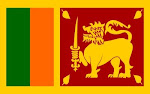


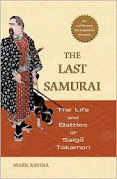


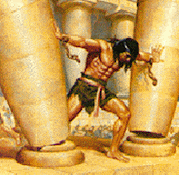


.jpg)


 Posts
Posts